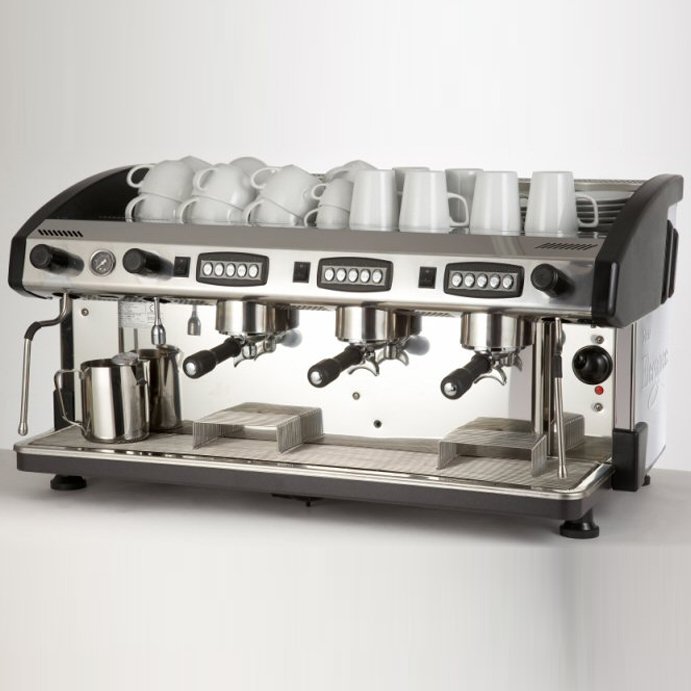
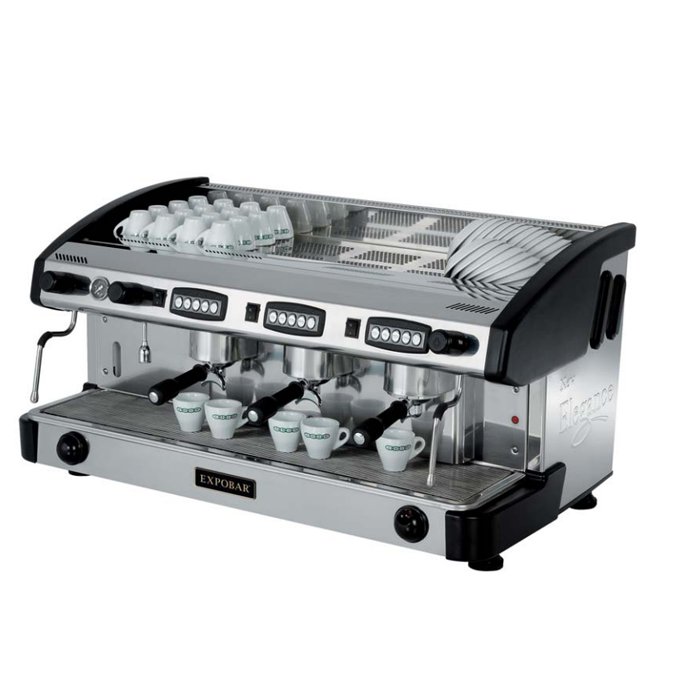
A three-group machine is a fixed installation rather than something you unbox and switch on, and the Expobar Elegance 3 Group is best approached with the counter drawn out before the order goes in. It needs a mains water feed, somewhere for waste to go and an electrical supply matched to the model, and all three want to be agreed in advance rather than improvised on the day. Measure the whole run, not just the machine: working room for a barista’s hands either side, a grinder, a knock-out drawer and somewhere to keep cups warm. Check the route in as well, because doorways, lifts and any steps between the vehicle and the final position decide whether installation is straightforward or a struggle.
Is your site really a three-group site?
The figure that decides this is not your daily total but the shape of your busiest twenty minutes. Somewhere with a queue that forms at half past eight and never quite clears until eleven is the natural buyer; somewhere with a steady trickle spread thinly across opening hours is not. The second question matters just as much: can you put two people behind the bar when it matters? A third group only earns its keep when there are enough hands to use it, and on a single-operator site it will spend most of its life as a very expensive cup warmer. If you are weighing that up, our guide to choosing between traditional espresso and bean to cup works through the staffing side of the decision honestly.
Performance under pressure
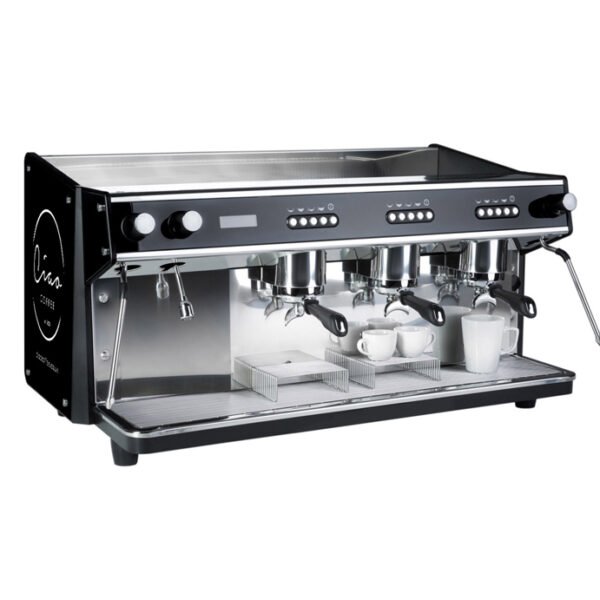
Three group heads run independently, so one barista can pull doubles while another works flat whites without either waiting for the other. A large boiler underpins the whole thing, holding temperature and steam pressure steady through consecutive extractions rather than dipping as the rush builds. Volumetric dosing measures each drink electronically instead of by eye, which keeps shot length, and therefore taste, the same whoever happens to be on shift. The controls are deliberately straightforward, so training a new starter takes minutes rather than days. Stainless steel throughout means the machine still looks the part after a season of hard service, and the surfaces wipe down quickly at the end of a shift.
Three groups, one big boiler
- Three independent group heads with programmable volumetric dosing
- Large boiler holding brew temperature and steam pressure through a rush
- Stainless steel bodywork, steam wands and a hot water outlet for milk drinks and teas
- Covered by a two-year warranty
Milk is the real bottleneck
With steam wands and a separate hot water outlet, the drinks list is entirely yours: espresso and macchiato through flat whites, cappuccinos and lattes, with americanos and teas drawn without tying up a group. Fresh milk textured by hand is the reason most operators buy traditional equipment in the first place, and it is also the part that takes practice. Plant-based alternatives behave differently under steam and are worth trialling before they go on the board; keep separate jugs for them so a dairy-free order never has to be remade. On a bar this size, milk rather than extraction is almost always the constraint, so jug discipline and a sensible pouring order do more for service speed than anything else.
Specify the bar, not just the machine
Grinders, tampers, knock-out drawers and the rest of the bar kit are worth ordering at the same time, not bought piecemeal afterwards. A grinder that cannot keep three groups fed quietly undoes the point of having bought three.
Routine, water and servicing
The buttons take minutes to learn; consistency takes longer and comes from dose, tamp and milk technique rather than from the machine. Build the close-down into the rota: backflush the groups, scrub baskets and shower screens, purge the wands after every jug through the day, and leave the knock box and drip tray clean for the morning. Treat filtration as part of the purchase rather than an accessory, and book scheduled servicing so wear parts are dealt with on a plan rather than during a Saturday rush.
The bars that clear a queue with it
- Busy high-street cafés and food halls with two people on the bar at peak
- Restaurants where coffee arrives in concentrated waves
- Hotel breakfast service with a fixed, heavy morning window
- Trained bars that want a decaf or training group held in reserve
Or step down a size
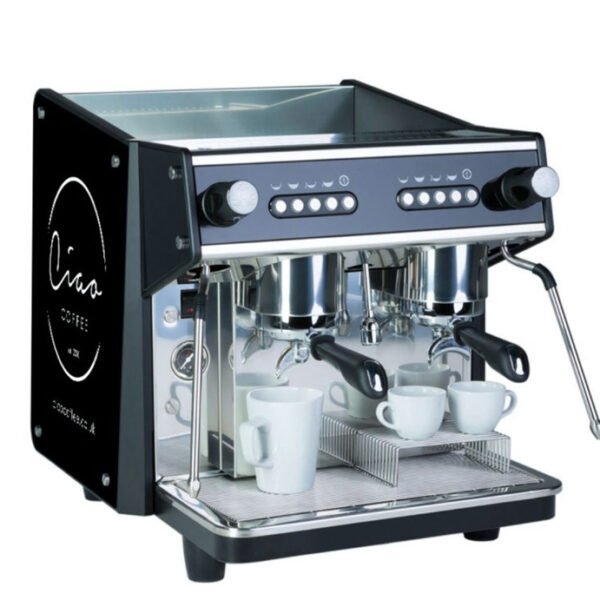
If your peak is smaller or your counter shorter, a two-group machine from the wider range of commercial espresso machines will serve you better and leave budget for a stronger grinder. Where the queue genuinely justifies three groups, though, nothing else clears it as calmly.
Reviews
There are no reviews yet.