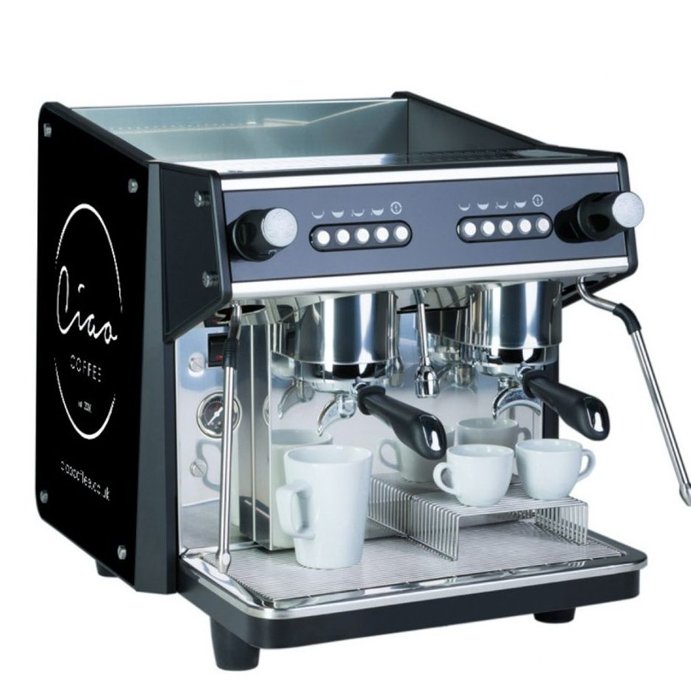
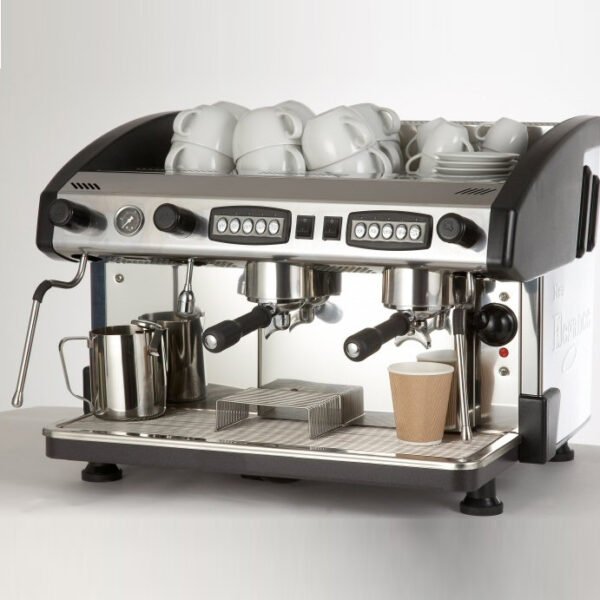
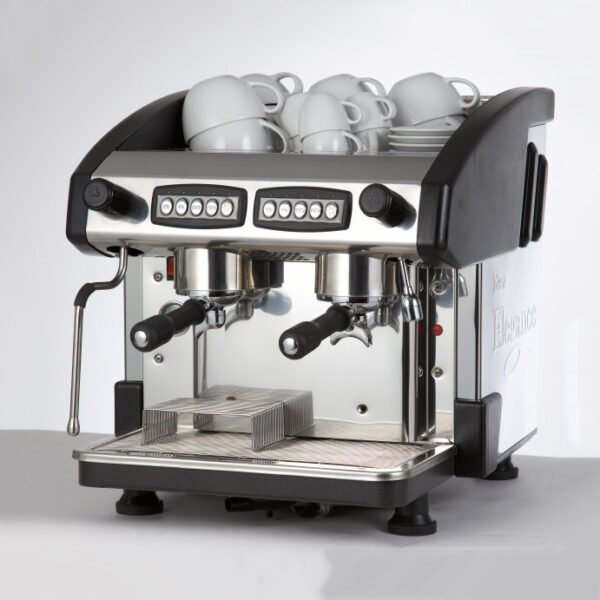
Micro-cafés, kiosks and hotel breakfast counters rarely have the width for a full-size two-group machine, yet they still need two groups at peak. The Ciao E2C 2 Group Compact Espresso Machine closes that gap with a shortened body that keeps both group heads and both steam wands intact. Nothing has been thinned out to achieve the smaller footprint; the machine is simply packaged more tightly around the same working parts, which makes it one of the more practical entries in our commercial espresso machine range. Like the rest of that range it is sold new with a two-year warranty.
What the shortened body still gives you
Two group heads keep espresso and milk drinks running side by side, so service does not stall behind a single spout when a coach party arrives, and precise temperature regulation holds extraction steady through consecutive shots. The steam wands carry the pressure to produce silky milk rather than bubbly foam, and having two of them means two people can texture at once, which is the difference between a queue that moves and one that does not when flat whites outsell black coffee. Tall group clearance lets large takeaway cups fill directly, saving a step at the busiest times, and the controls are laid out simply enough that a new team member can be shown the machine within a single shift. Oat and other alternative milks run through happily, though a separate jug saves confusion.
The peak it is designed around
The useful question is not how many drinks you sell in a day but how many you have to make in your worst twenty minutes. A site that ticks over steadily manages on one group; a site that stands quiet then takes a coach party cannot. That second pattern is what the E2C is aimed at, which in practice means independent coffee shops with a short counter and a proper peak, food-to-go counters filling large takeaway cups directly, hotel breakfast rooms and members’ clubs with concentrated demand, and office hospitality points where footprint decides the specification. In every one of those, the counter was never designed around a coffee machine, so the machine has to fit the room rather than the other way round.
Planning the bar, not just the machine
A traditional machine is never a single box. Allow space alongside for a grinder and knock-out drawer, room for tamping, a milk fridge within reach and somewhere warm for cups. Depth and clearance above matter as much as width, since the machine has to be serviceable without dragging it forward. Settle the electrical, water and waste connections before the counter is built rather than after, and give grinder pairing the same attention, because the grinder does as much for the cup as the machine does. Our grinders, tampers and bar equipment covers the rest of the bar.
What comes with it, and why the training matters most
The package brings a water filtration kit, installation and equipment training, a coffee starter pack and on-site parts and labour cover. Of those, the training is the line that decides how the machine actually performs, because the trade-off against an automatic is honest: the milk is only as good as the person steaming it. Have the whole team present rather than one nominated person who then leaves in March. Once the grinder is dialled in, the daily job is dosing consistently, tamping level, purging and wiping the wands after every jug, and watching the shot times. It is a routine rather than an instinct, and it is what keeps coffee good whoever is working.
Filtered water, and the servicing conversation
Run the machine on filtered water using the filtration kit supplied with it, and keep to a daily clean of groups, baskets and wands. Limescale is the most common reason a machine of this type dies early, and it is almost entirely avoidable; water filtration and limescale protection explains what hard water does to a group head. Because on-site parts and labour cover is included, agree servicing intervals at the point of order and diarise the filter changes then, while somebody is still thinking about it. We can advise on layout, grinder pairing and servicing intervals before you order, and set the machine up so a small team can run it confidently from day one.
Three reasons to buy something else
If nobody will be trained to steam milk, or turnover makes that training a losing battle, a bean-to-cup machine gives a more consistent cup for less effort. If your peak is heavy and sustained, a full-width body is the honest answer. And if the counter can spare only a very narrow run, a single group may be all that will fit. None of that is a criticism of the E2C. They are simply the sites where a compact two-group would be asked to be something it is not.
Reviews
There are no reviews yet.