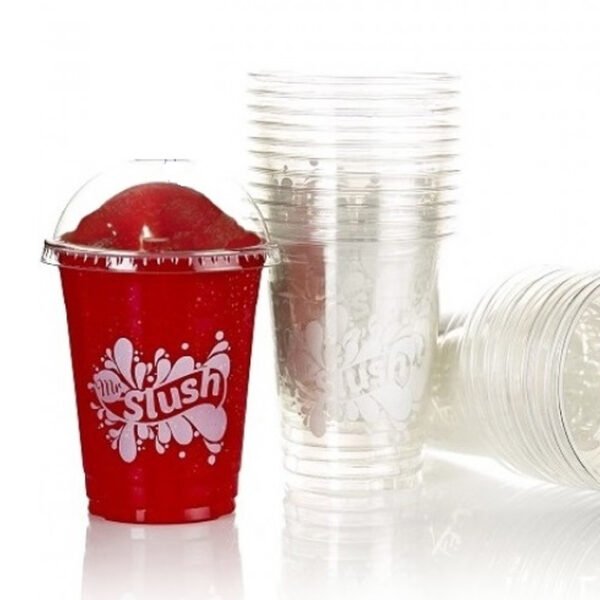
Slush Cups
Slush cups do a specific job that a standard cold drink cup does not. They have to hold a heavy, semi-frozen product without flexing, take a spoon straw that can move thick slush, survive being carried around a busy site by a nine-year-old, and stay clear enough that the colour of the drink does the selling from the counter.
The sizes here cover the way slush is usually priced. A 16oz cup is the standard line serve. The 20oz is the upsell, and it earns its place beyond slush as well — smoothies, iced coffee, milkshakes and soft drinks all work in the same vessel, which keeps your cup order simple. Domed lids in 12oz allow an overfilled, generous-looking serve; flat lids stack tighter and travel more securely in a carry tray. Thick-grade PET is the detail to insist on: it resists cracking when cups are stacked and gripped, and it keeps the product looking bright rather than cloudy.
Two practical points. Standardise sizes across the whole operation so lids and straws always fit — mismatched components cause leaks, complaints and refunds, and they always show up at the worst moment. And buy ahead of the weather, in case quantities per size rather than mixed pallets, because a hot bank holiday will clear a stockroom in days.
Keep spoon straws and serving accessories in stock alongside them. If you are still building the offer, slush and milkshake equipment and margins is the place to start, and pricing a takeaway serve will tell you what each cup should be sold for.
Showing the single result
-
Slush Cups
Mr Slush Cups 16oz x 1,000
Original price was: £75.00.£60.00Current price is: £60.00. Add to cart