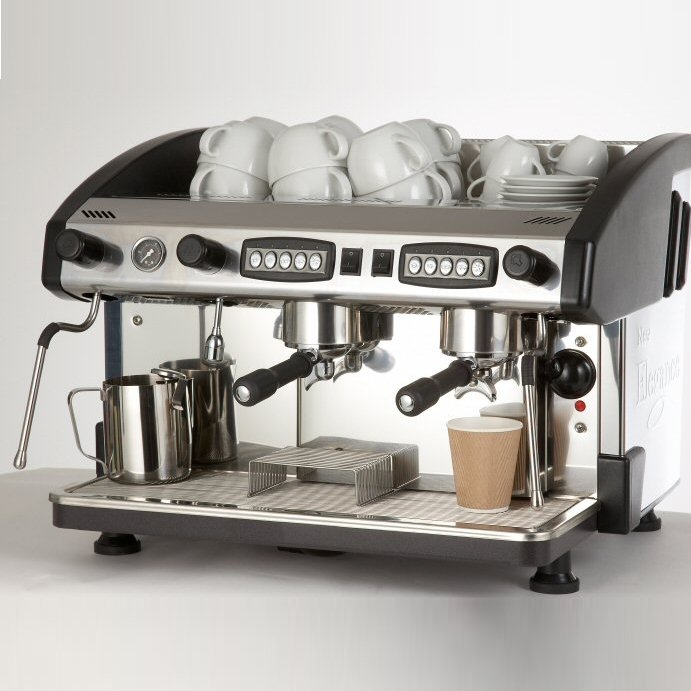
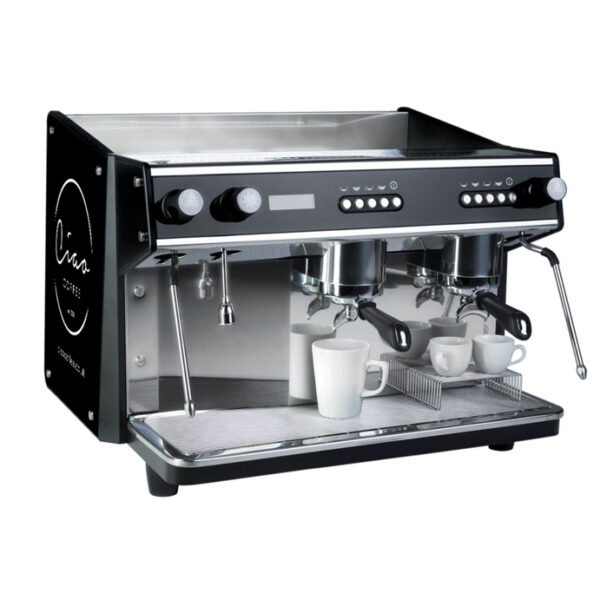
Most independent coffee shops sit in the same bracket, with a steady stream of drinks all day rather than one enormous peak. The Expobar Elegance 2 Group is built for exactly that pattern, comfortably covering sites that serve up to around 200 coffees a day without ever feeling stretched.
The boiler is why it holds up
An 11-litre boiler is the heart of the machine, storing enough hot water to keep brew temperature and steam pressure level while both groups run together. Automatic dosing repeats the same shot volume every time, which matters far more than raw speed when several members of staff take turns on the bar. In practice that means fewer wasted movements per drink, and a bar that keeps moving when three or four orders land at once.
Tall groups, and what they save you
Group handles sit high enough to take cups up to 14cm tall, so large takeaway sizes fill directly without decanting. That saves a decant, a wasted movement and a spill on every large order, which adds up faster than most buyers expect. A powerful hot water outlet clears teas and americanos quickly, and the stainless steel construction stands up to the wiping down and knocking about of daily commercial use.
Count your busiest hour, not your day
The 200-a-day figure is a comfortable working range, not a ceiling to be hit every day. What actually strains a machine is concentration: a hundred drinks spread over eight hours is a gentle day, while the same hundred arriving in two bursts either side of a lunch service is a workout. Before you commit to any two-group machine, count three things honestly.
- The drinks going out in your single busiest hour, not the daily total
- How many staff are on the bar during that hour
- What share of those drinks are large takeaway cups
Our guide to sizing a machine by cups per day sets out how to do that count properly, and it is worth twenty minutes before you order.
What it needs at the wall
Treat this as a plumbed appliance. It wants a mains water connection, a waste route for the drip tray and an electrical supply rated for the model, and those three should be settled with whoever prepares the site before delivery is booked. Allow width alongside for a grinder and a knock-out drawer, and remember that the barista needs elbow room to knock, dose and tamp without turning sideways. If the counter is already tight, measure before you fall in love with the machine, because the compact version of the same model exists precisely because that measurement often comes back short.
Milk work and the drinks board
Fresh milk steamed by hand is what this machine is for, and the steam arm textures milk properly rather than simply heating it, which is the difference between a flat white worth charging for and a hot milky coffee. Oat and other alternatives can be textured on the same wand, though they respond differently and are worth practising with before they appear on the board. Keep a dedicated jug for them and the dairy-free order stops being a nuisance.
Who takes the bar
Controls this straightforward are a training asset. A new starter learns the buttons in a shift; what takes longer is grinder adjustment, dose and pouring, which is where your quality actually comes from. That suits an independent café, a deli, bakery or sandwich bar with all-day trade, or a hotel bar and restaurant serving coffee through the day, provided somebody on the rota is trained to steam milk properly.
The close-down routine
Set a routine and stick to it. Plumb the machine into filtered mains water to protect the boiler from limescale, and book periodic professional servicing so wear items are changed before they let you down. The machine is supplied new with a two-year warranty.
- Backflush both group heads
- Clean the baskets
- Clean the shower screens
- Purge the steam arm after every jug rather than at the end of the day
- Rinse the dedicated non-dairy jug and put it away separately
- Empty the knock box
- Rinse the drip tray
- Note anything that needs attention at the next service visit
When something else suits better
If nobody on site will be trained to steam milk, or the coffee is a convenience rather than a proposition, an automatic machine will give you a more consistent cup with less input. If the counter run is the binding constraint rather than the volume, look at the compact two-group instead. And if your peak genuinely doubles what is described here, step up a group rather than asking this one to sprint all day. The rest of the traditional espresso range covers those cases, and the grinders and bar equipment that go with them sit alongside.
Reviews
There are no reviews yet.