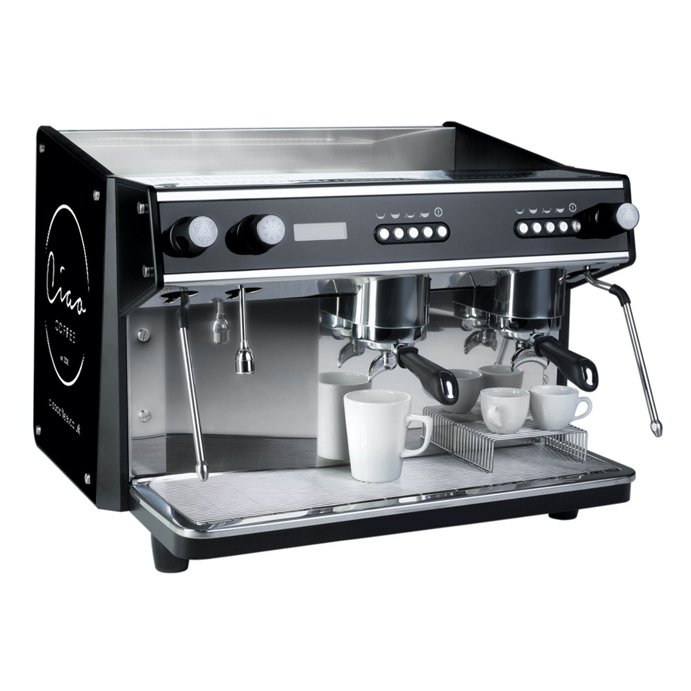
Before anything else, know that this is a plumbed machine rather than a tank-fill countertop appliance. The Ciao E2 2 Group needs a mains water supply, a suitable electrical connection and a plumbed waste, and the sooner your installer is in the conversation the better the counter will work on the day the machine lands on it.
Getting the position right first
Settle the counter layout around those three services instead of trying to retrofit them afterwards. Leave clearance behind and above the unit so an engineer can reach the boiler and group seals without dismantling your counter, and keep the grinder, knock-out drawer and milk fridge within a step of the barista rather than across the room. Agreeing the position and the services in advance is what stops delivery day turning into a wasted one, and what to have ready before a machine arrives is the place to start.
Twin-group output in a small body
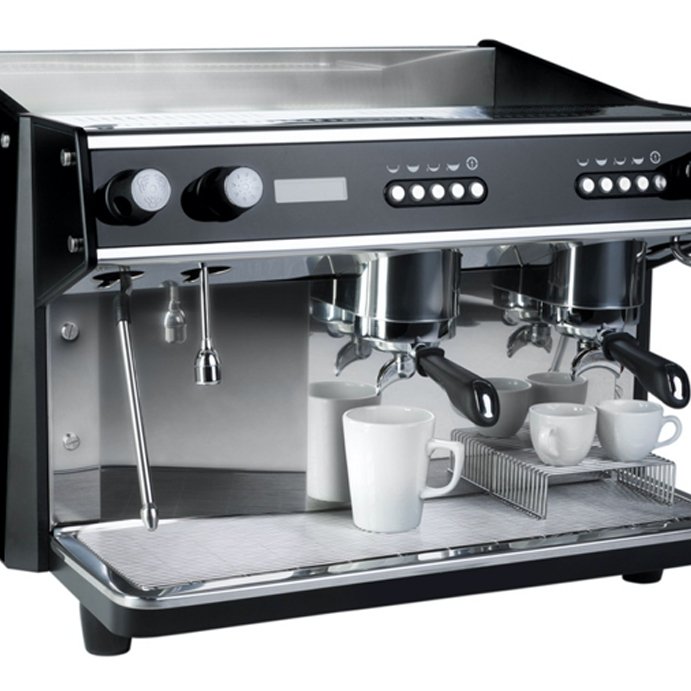
The machine itself is aimed squarely at the problem of counter space, offering genuine twin-group output in a chassis sized for smaller bars, restaurant pass areas, delis and hospitality venues that cannot surrender half a metre of worktop. Two group heads mean a second order does not wait for the first, so one barista can pull shots continuously while a colleague textures milk on the steam wand, which is what keeps a queue moving at breakfast or through a lunch rush. Temperature stability across both groups is what makes back-to-back extraction repeatable, so the tenth flat white of the rush matches the first.
- Two group heads for parallel extraction during peak trade
- Compact chassis designed for tight commercial counters
- Steam wand for texturing milk to latte and cappuccino standard
- Simple programmable controls that new staff pick up quickly
- Robust commercial build for continuous daily service
- Plumbed installation to mains water, power and waste
- Supplied as a package with the working essentials included
- Two-year warranty covering the machine
Milk, menu and the training that goes with it
A steam wand puts fresh milk at the centre of the menu, and that is what lets you serve cappuccino, latte and flat white to a standard customers will pay for. It is also the part of the job that takes practice. Dosing and timing can be programmed; milk cannot, so budget training time for texturing rather than assuming it arrives free with the machine. The upside is that fresh milk opens the whole modern coffee menu, oat and other alternatives included, which a powdered system cannot match. Controls are kept deliberately plain, which shortens training for part-time and seasonal staff, and there is nothing on the panel to distract from the fundamentals of dose, grind and timing.
Sizing it against your busiest hour
Consider the E2 where daily covers justify a traditional espresso bar but the room does not allow a three-group installation. Independent coffee shops with a tight counter run fall into that bracket, as do bistros and delis, pubs and bars adding a proper coffee offer, and hotel breakfast stations working a concentrated peak. The deciding question is not how many cups you serve in a day but how many land in your busiest hour, because that is when a single group runs out of road and a third group would be idle capacity you paid for. Sites with trained or trainable staff who want control over the shot are the ones that get the most from it.
Water, cleaning and long-term servicing
Build in a daily backflush and a periodic descale according to your water hardness, and the machine will keep pace with service for years rather than seasons. Water is the variable most operators underestimate: limescale is the most common cause of premature failure in commercial machines, and our guide to water filtration and limescale explains why prevention beats descaling, which is a recovery job rather than a plan. Beyond the daily routine, group seals, showers and burrs need attention on a schedule, and the maintenance schedule puts each of them on a weekly, monthly or annual footing.
The case for an automatic instead
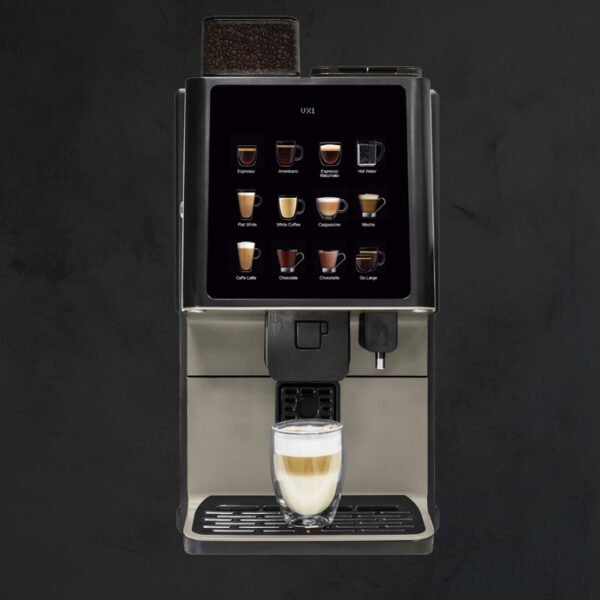
If nobody on the rota will be trained to texture milk, or if coffee has to be served when the counter is unstaffed, a traditional machine is the wrong tool however good it is. A bean to cup machine will give more consistent results with less skill in the building, and there is no shame in choosing it.
Reviews
There are no reviews yet.