
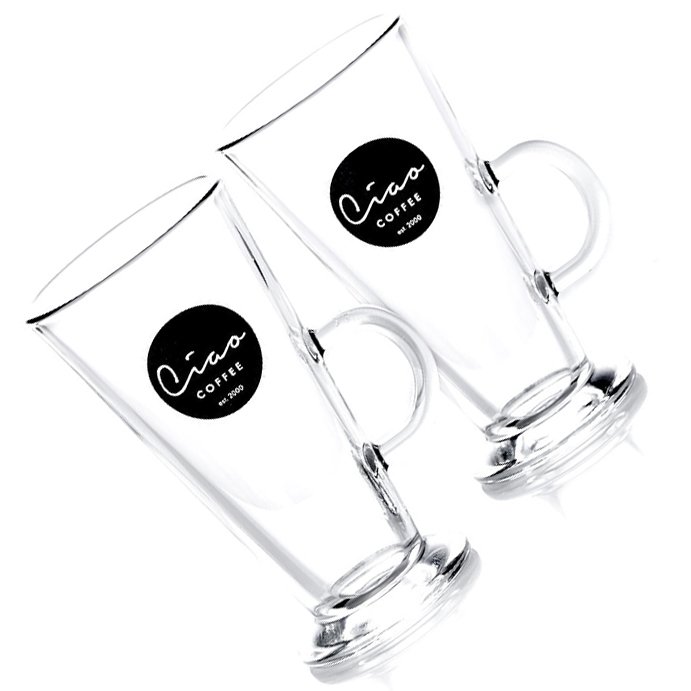
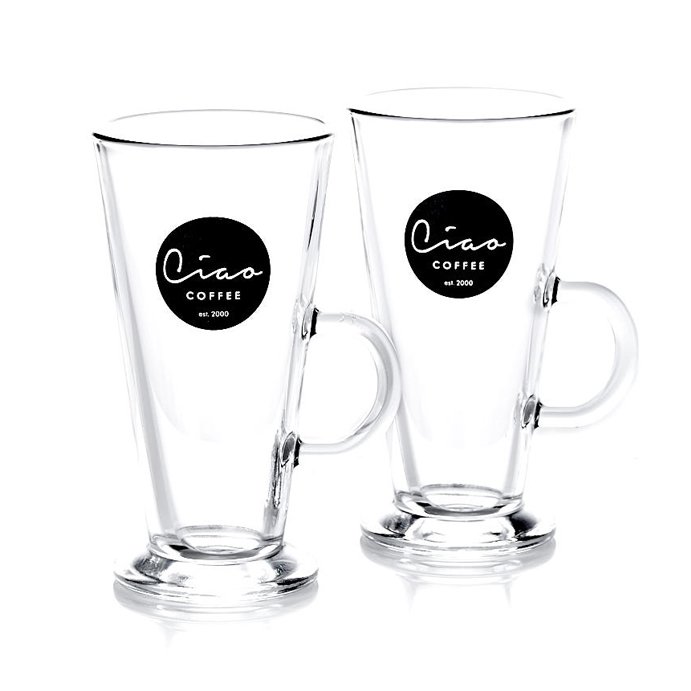
Glassware does a lot of quiet work behind a good coffee menu. If you pour milk-based drinks and want guests to see the layers rather than take them on trust, this case of twelve Ciao latte glasses gives you a matched, branded set ready for service in cafes, delis, hotel lounges and staff restaurants.
Shaped around the drink
The tapered V profile is designed for layered milk coffee. Espresso settles into the base, steamed milk rises through it and the foam sits proud at the top, giving a visible finish that reads as care rather than volume. At 12oz, or 385ml, there is headroom for a generous latte or a tall cappuccino without the drink reaching the rim, so staff can carry them across a busy floor without spillage. The wide mouth gives baristas room to finish a design rather than fight the shape of the vessel, and because the glass is clear, milk texture can be checked at a glance rather than guessed at. Ciao branding reinforces the coffee you are already serving, and the glasses are boxed by the dozen, which keeps back-of-house storage tidy and reordering simple.
One case, or two?
A single case sets up one service station comfortably, which makes twelve a starting point rather than a finished par level. The question worth asking before you order is how many milk drinks leave your counter in the busiest hour, not across the day, because that is the number the wash cycle has to keep up with. A venue where covers turn over quickly, or where the dishwasher sits away from the coffee point, will want a second case as a standing spare so a breakage or a backlog at the sink never leaves the counter short. Sites with high staff turnover should plan for the same reason: glass losses are a training cost as much as a breakage cost.
Keeping the glass clear, and keeping it alive
Glassware lasts longest when it is treated as its own category rather than thrown in with plates. Let glasses come back from hot water before they are stacked, keep them off the same rack as cutlery, and give staff a clear rule about where used glasses go so nobody carries four at once by the rims. Cloudiness comes from milk residue and coffee oils, both of which arrive from the drink you are serving all day, so wash promptly rather than letting glasses stand, rinse the steam wand between drinks so milk never bakes on, and fold glassware into the same routine you use for the machine; our maintenance schedule for a coffee operation breaks that work into daily, weekly, monthly and annual tasks, and glassware belongs on the daily list. Hard water is the other enemy, and it shows on glassware long before it shows in the cup, which is why water filtration and limescale in a coffee operation is worth reading if you are anywhere on the chalk and limestone of the south and east.
When a glass is the wrong answer
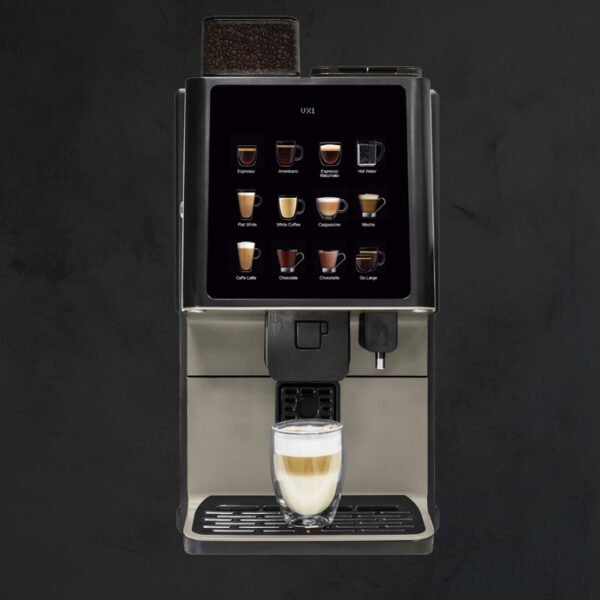
Branded glass is a straightforward way to mark the difference between eating in and taking out, and it lifts the perceived value of a drink that costs the same either way, so it pays for itself fastest in independent coffee shops and bistros serving at the table, in hotel lounges and breakfast service, in delis where presentation carries the price, and across office hospitality. If most of your trade walks out of the door, though, put the money into cups and lids instead and keep a smaller quantity of glass for the tables you do have. If your milk drinks are mostly cappuccino served short, a cup and saucer suits the drink better than a tall glass. And if the coffee itself is the weak link rather than the presentation, start with the machine, because the Ciao bean to cup range is where most sites are actually served.
Reviews
There are no reviews yet.