
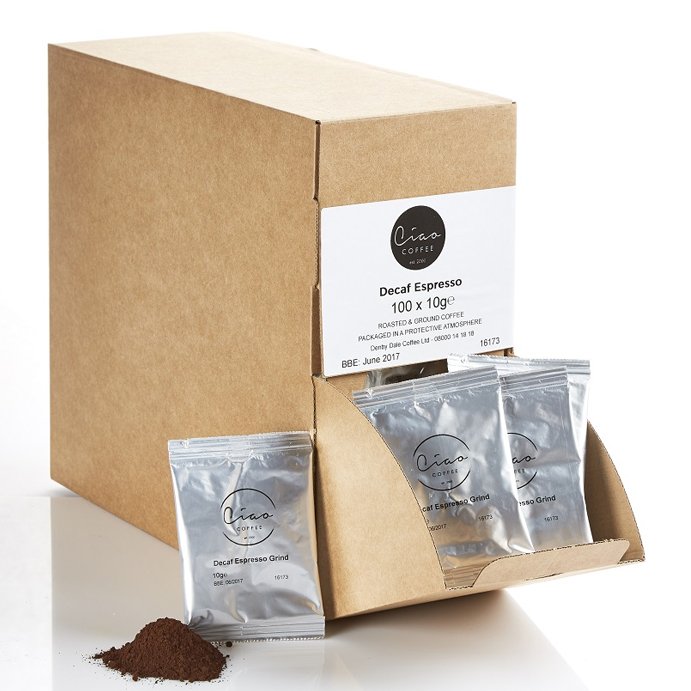
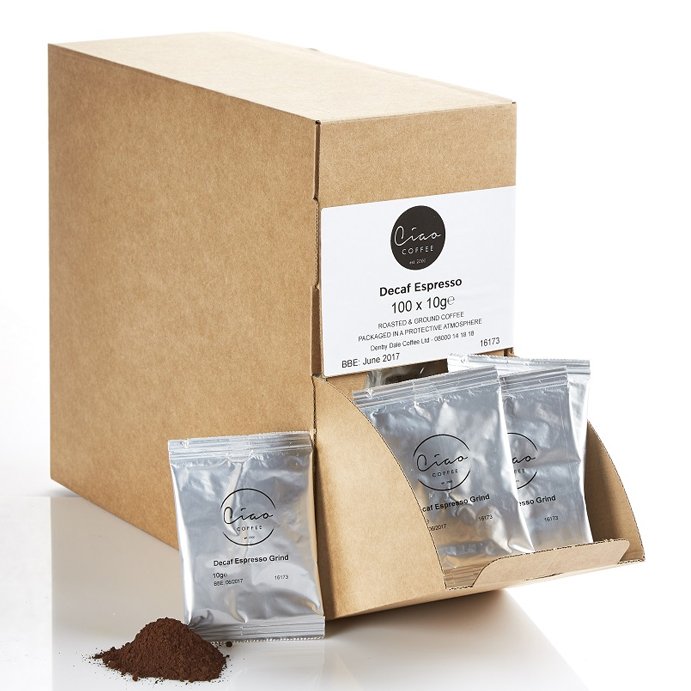
Decaf is the order that quietly costs venues money. Buying a second grinder, finding somewhere to put it and cleaning down between blends rarely makes sense for a handful of cups a day, and the usual alternative, a bag of pre-ground decaf open on a shelf, stales long before it is used. These Ciao sachets remove the problem entirely.
Portioned, sealed and ready to pull
Every sachet is filled with 14g of pre-ground espresso, a double portion measured at the point of packing so nobody has to weigh or guess, and a box holds 100 of them individually sealed. The seal keeps the grind protected until the moment it is opened. Tear, dose, tamp and extract, and the shot pulls with the body and crema of the caffeinated blend: a dark roast built from beans sourced from Costa Rica, Brazil and Sumatra, producing a thick, silky crema and a full espresso character while staying low in caffeine. No separate decaf grinder comes into it at any point.
What it saves, beyond the cost of a grinder
The obvious saving is the second grinder, but the one operators notice week to week is the bench space and the cleandown. A shared grinder has to be run through and purged every time the blend changes, which wastes coffee, wastes minutes and still leaves a doubt about what is sitting in the chute. A sealed sachet sidesteps all of it. There is no hopper to empty, no burr chamber to brush out and no cross-contamination worry when a customer asks whether their cup really was decaffeinated, which is the question that matters most in care and education settings, where a fixed and repeatable dose is worth more than flexibility. On a bar where coffee is one job among many, that is time handed straight back to service.
A box lives happily in a drawer or on an under-counter shelf and takes a fraction of the space a second grinder demands. Store it cool and dry, and the stock level is obvious without opening anything, so reordering never turns into a stocktake. Keep it within reach of the group head rather than in a back store, though, or it will not get used on a busy Saturday.
The bar routine around it
Because the dose is fixed, the drink is the same whoever makes it, which matters most in venues where coffee is a secondary skill rather than a core one. Staff who can already pull a shot need no further training at all, and staff who cannot will find a fixed dose considerably more forgiving than a hopper and a set of scales. Tamping is still worth demonstrating properly: an even, level tamp is the one variable a sachet cannot control for you. Portafilters and baskets need the attention they always did, and the group should be backflushed on the usual schedule, since a low-volume decaf shot does nothing to keep a machine clean on its own. The daily, weekly and annual cleaning routine is worth reading if nobody on site has written one down yet.
Sachets or a second hopper?
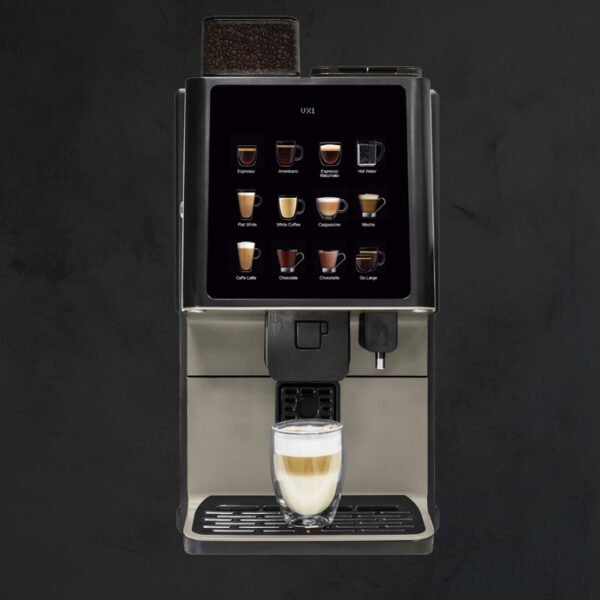
Where decaf is a genuine seller, whole beans and a dedicated hopper are worth the bench space and the cleandown they cost you. Where it is an occasional request, the after-dinner order in a restaurant or hotel, the caffeine-sensitive visitor in a meeting room, the café with no bench space left, sachets win on every practical measure: no stale beans, no extra equipment, no cleandown. Plenty of sites run both, keeping beans in the machine for the main bar and a box of sachets behind a second service point, a function room or a pop-up bar. You will find these listed with the rest of the Ciao Essentials consumables, and they suit the Ciao machine range as readily as a traditional espresso setup.
Reviews
There are no reviews yet.