
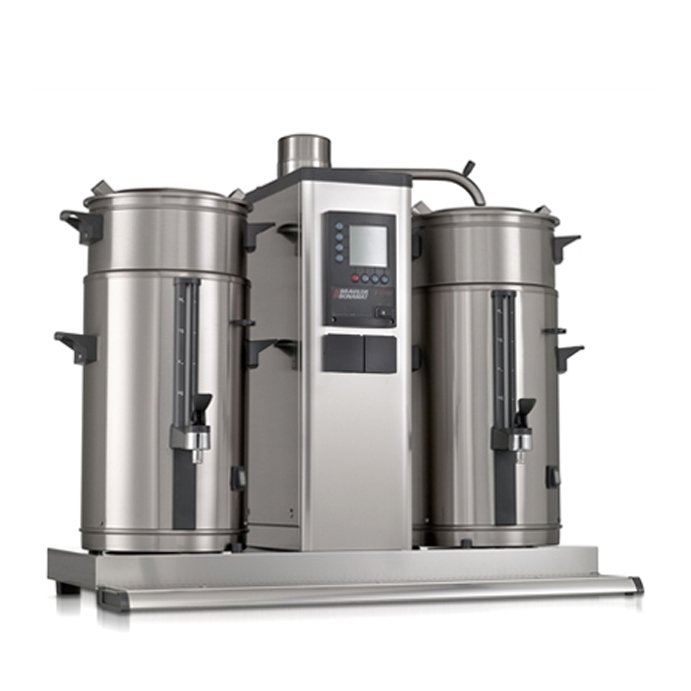
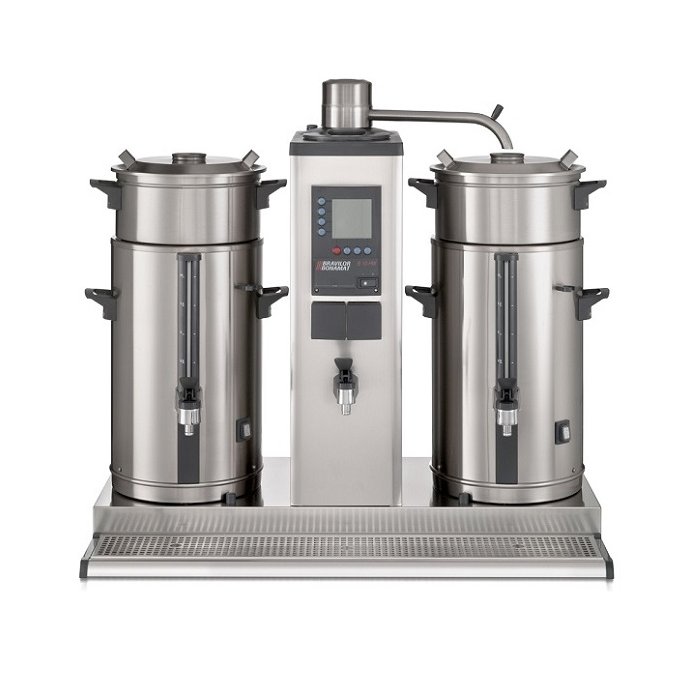
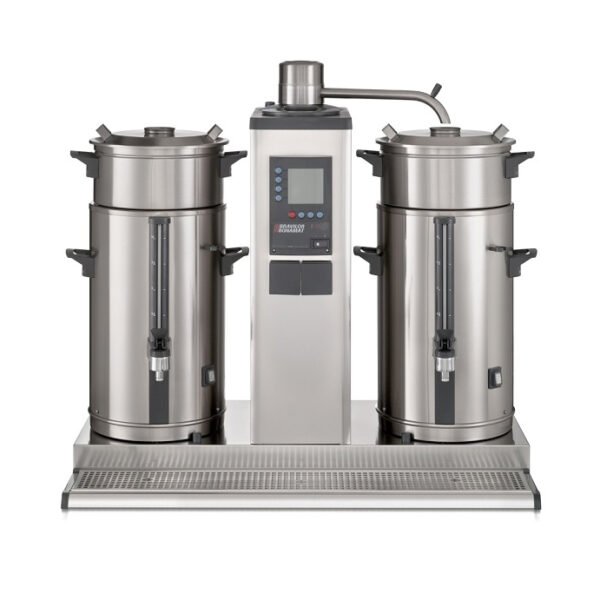
Getting the size right is most of this decision. The Bravilor B10 round filtering machine sits neatly between the compact brewers and the truly industrial ones, and its two 10 litre containers hold a great deal of freshly brewed coffee ready to dispense, which covers most conference breaks, canteen services and function catering without stepping up to the largest units in the range.
When the B10 is the wrong size
If your peaks regularly empty both containers, the larger B20 model is the honest answer. If they rarely empty one, look at a single-container machine and put the difference into better beans. Deciding that properly is a question of how much capacity a twin-container brewer really needs rather than what your annual volume suggests, and the full commercial filter coffee machine range makes that comparison easier than a spec sheet does. Conference venues, education catering, care homes, hospitals and larger staff restaurants tend to land on this size, as do event caterers who need volume but also need to move equipment between rooms.
Two containers and the rotation they allow
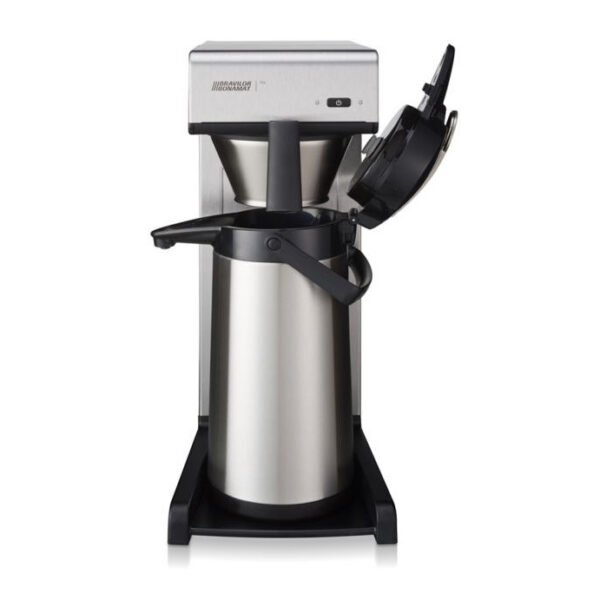
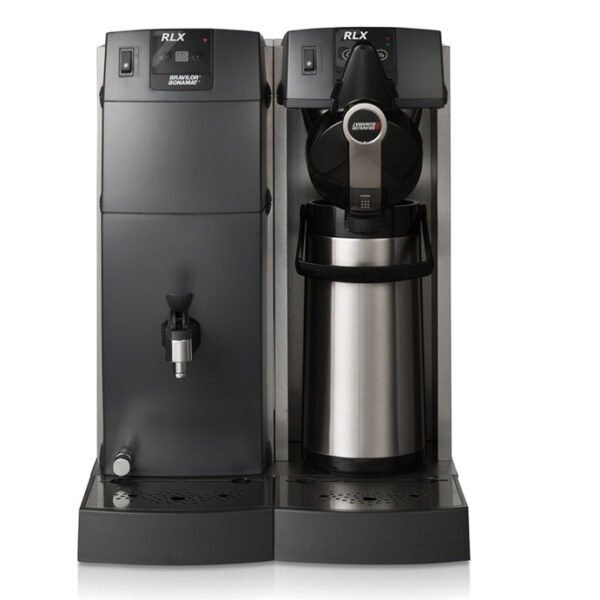
Rather than brewing into open jugs, the machine produces large batches directly into sealed containers, and coffee is then poured on demand. Because it is held rather than sat over a heating element, quality holds up better across a long service. Two containers is the useful part: one goes out to the serving point while the second is brewing, so the counter is never waiting on a cycle. That rotation is what makes the B10 feel larger in practice than its capacity suggests, and it is the reason twin-container machines suit venues running two rooms at once. The mains water connection keeps cycles running back to back, so a second batch follows the first without anyone fetching water, and where tea is also on the menu the separate hot water tap removes the need for a second appliance on the counter.
Where the plumbing puts it
Because it plumbs into the mains, position follows plumbing. It wants a level surface deep enough to work around a full container, space to swing the brewing head open, and drainage within reach, all of it in commercial construction meant for daily high-volume catering use, which is warranted for two years when bought new. Speak to us about the electrical supply before the counter is built rather than after, and consider the walking route to your serving points at the same time, since carrying a full container across a busy kitchen is a decision you only want to make once. A qualified engineer should make the final connections.
The serving table does the rest
Nothing about the drink is decided at the machine once it has brewed, so the menu is really built on the serving table: dairy, a non-dairy option, sugar and stirrers laid out where people pour. Tea comes off the hot water tap without a second appliance competing for the same length of counter. And because the containers lift clear and can be carried to a satellite serving point, part of the service can happen somewhere else entirely, whether that is a delegate walking to a breakout room or a stand set up in a car park.
Brew before the break, not during it
The machine rewards a bit of forward planning, and a counter that brews ahead of the break never falls behind. A single operator can run it while others serve, and training amounts to loading, starting and swapping containers, so the skill does not walk out of the door when a seasonal team changes over. Hand the team the day’s timings rather than leaving them to guess, and brewing lines up with the breaks instead of chasing them.
Water is what wears it out
Maintenance is limited to thorough cleaning of the containers and brewing components, plus a descaling schedule set by your local water conditions. Because bulk machines pass a lot of water, filtering the incoming supply is usually cheaper across the life of the machine than descaling repeatedly and losing service while you do it. Put the routine in writing and hand it to the team rather than relying on memory; our maintenance schedule for commercial coffee equipment sets out sensible daily, weekly and annual jobs you can use as it stands.
Reviews
There are no reviews yet.