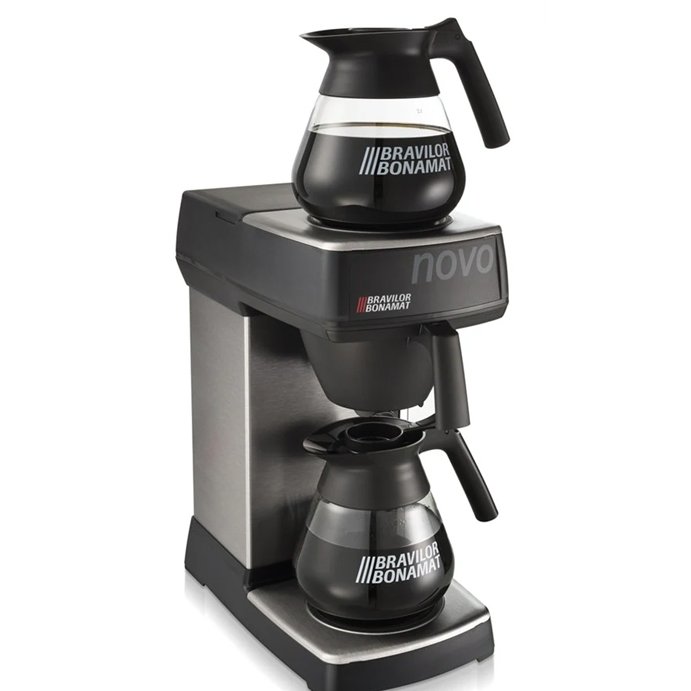
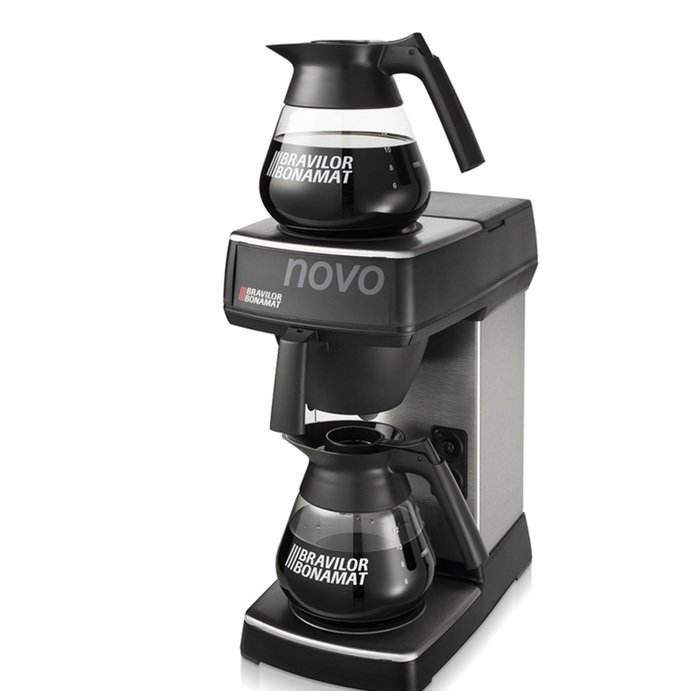
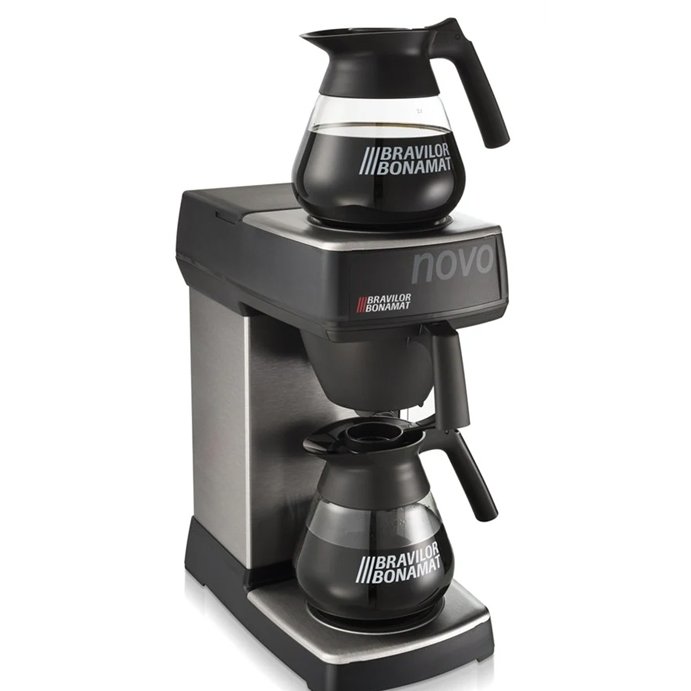
Space behind a counter is always at a premium, and a filter machine that takes up half of it is a hard sell. Compact by design, the Bravilor Novo Filter is the smallest step into a professional brewing range: commercial build in roughly the amount of space a domestic brewer would occupy.
Pour, serve, and why the components matter
The Novo works on the familiar pour and serve principle. Water goes in the top, ground coffee sits in a filter pan that takes standard paper filters for easy restocking, and the finished brew drops into a glass jug resting on a hotplate that holds it at serving temperature. Simple as that sounds, the difference between this and a supermarket brewer is in the components and the expectation of daily use. It brews at a proper temperature and stands up to being run several times a day, every day, in a working environment. New machines carry a two-year warranty, which is the other half of what separates commercial equipment from a supermarket brewer. Operation is intuitive enough that no training and no barista experience is needed, which is exactly the point in an office or a small team: there is no skill to maintain and no adjustment to get wrong.
The ten-minute question
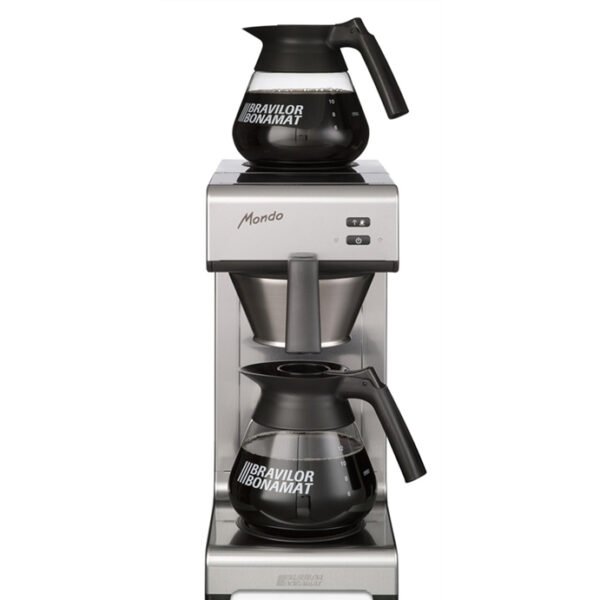
Offices, meeting rooms, small independent cafes, salons, showrooms, reception areas and staff kitchens are where the Novo earns its keep, along with hospitality venues wanting a second brewer for a function room or overflow area. It handles a steady trickle of demand comfortably. The useful test is not how many people are in the building, it is how many want coffee inside the same ten minutes, and if you regularly serve concentrated rushes it is worth looking at the Mondo range instead. If you are unsure which side of that line you sit on, our guide to sizing a machine against your busiest hour settles it quickly.
Nothing to install, nobody to book
It is a manual-fill machine, so it runs from a mains socket with no plumbing at all. It needs a level surface, a socket, and a sink close enough that filling it never feels like a chore. Allow a little clearance around the hotplate and enough height above the machine to lift the lid and load the filter pan comfortably, which is the measurement people forget under a low wall cupboard. Because it is not fixed to anything, it can move with the business: front counter today, meeting room next month, function suite for the summer.
Grind, milk and the cup that comes out
Filter is poured black and finished by whoever is drinking it, so your menu is decided at the milk jug rather than the machine. One jug of dairy and one carton of a non-dairy option on the tray will keep an entire office happy. Use a ground coffee suited to paper filters rather than an espresso grind, because with no pressure and no barista involved the grind is the single biggest lever you have on how the cup tastes. Agree a standard measure of coffee, keep the paper filters somewhere obvious so nobody improvises, and rebrew rather than reheat when a jug has been sitting. That is the whole training package.
Scale, and when to step up
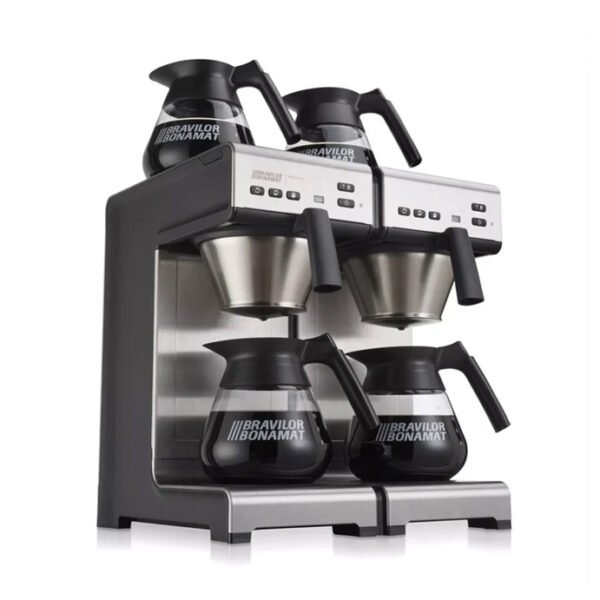
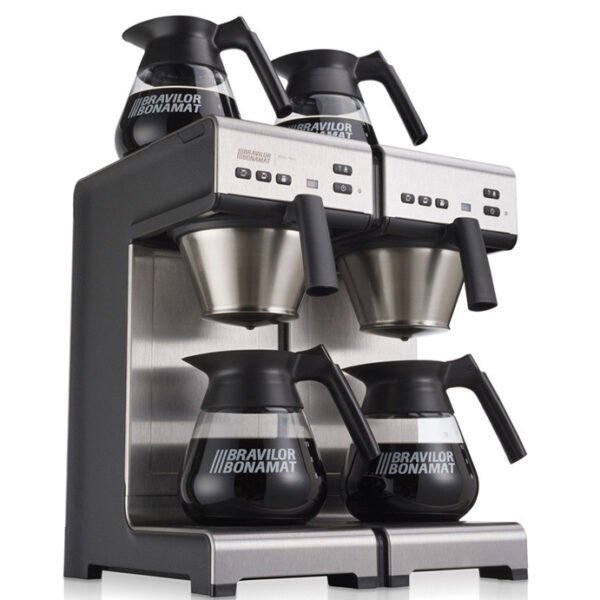
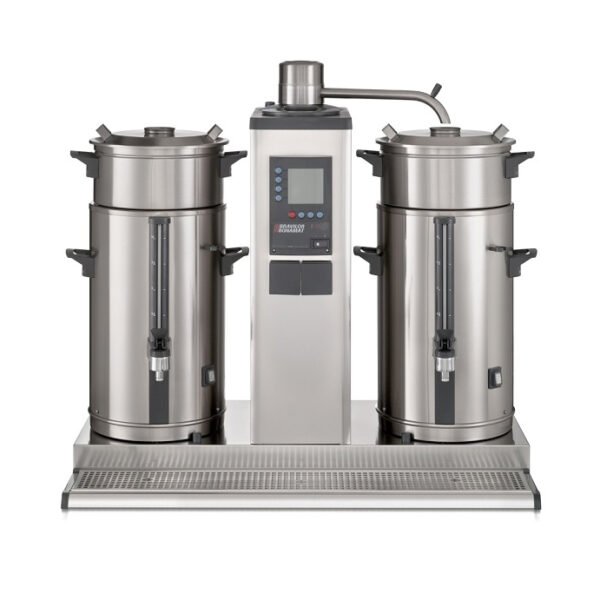
Maintenance is about as easy as commercial equipment gets. The jug and pan go through the same wash as everything else behind the counter, the hotplate wants wiping before anything bakes onto it, and descaling follows whatever your local supply demands. Filling from a filtered supply slows scale and improves the cup at the same time, which is the cheapest upgrade available to any manual-fill brewer. For the practical detail on water, power and what a small commercial machine needs from a site, the answers to the questions buyers ask most cover it. If you find yourself brewing back to back, move up to a single or twin Mondo, or to a plumbed round filtering machine if your coffee is served to a room rather than a counter; browse the commercial filter machine range to see how the sizes step up.
Reviews
There are no reviews yet.