
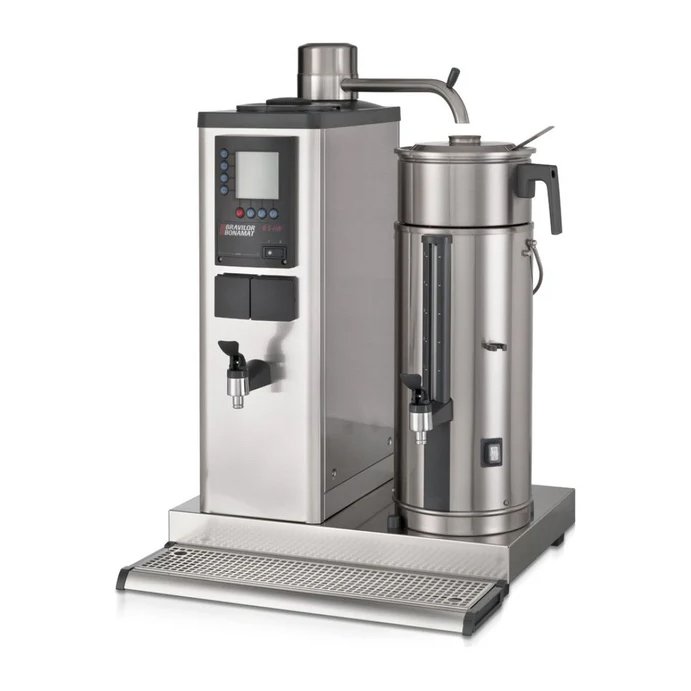
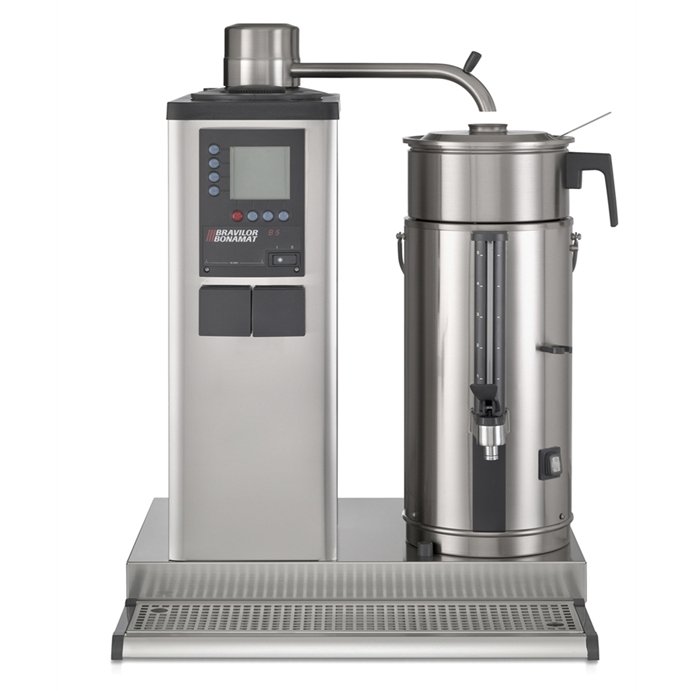
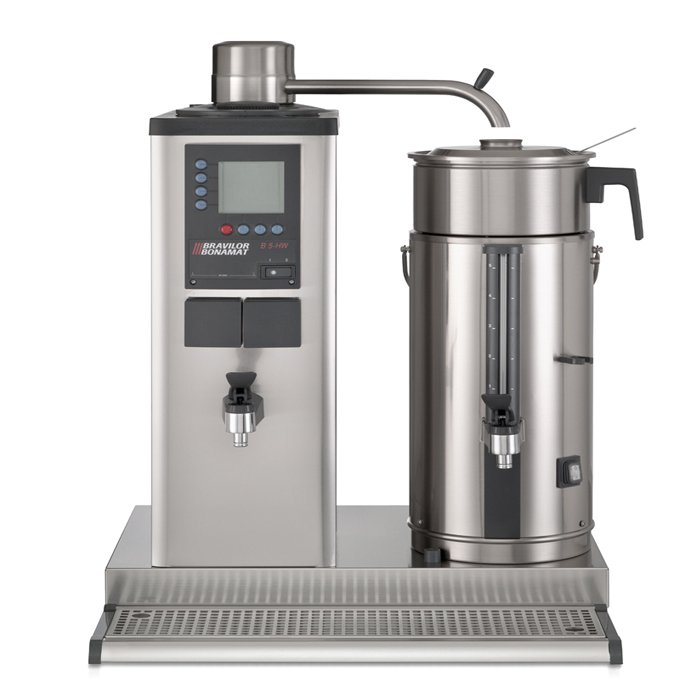
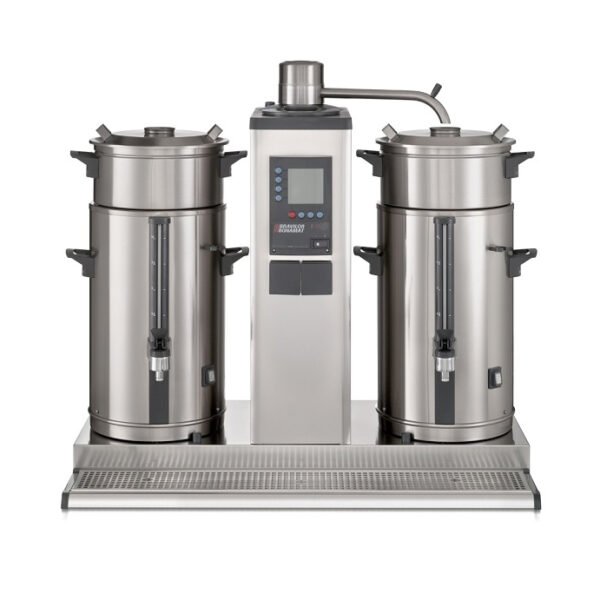
Counter layouts are rarely ideal, and a bulk brewer that only works one way round can be awkward to place. The Bravilor B5 L/R answers that neatly: it brews large quantities into a single 5 litre container that can sit at either the left or right hand side of the brewing system, so the machine works with the space you actually have.
Bulk brewing into one container
Brewing is done in bulk directly into the container, so coffee is held ready and poured on demand rather than extracted per order. One container keeps the footprint tighter than a twin arrangement while still producing far more per cycle than a jug-based brewer. As with the rest of the round filtering range, the machine connects to a mains water supply, so there is no manual filling to interrupt a run of service.
At a glance
- Single 5 litre coffee container, specified left or right hand
- Bulk round filtering for large quantities per brewing cycle
- Optional separate hot water tap for tea and hot drinks
- Commercial build for repeated daily use in catering settings
- Warranty of two years on a new unit
The volume question, honestly
A single container is the right answer more often than buyers expect. What matters is not how many coffees you sell in a day but how many land inside your busiest hour, and a great many canteens, care homes, education kitchens and meeting-room operations peak lower than they assume. Work from that peak rather than the daily total and the machine usually gets smaller, not bigger. Our guide to sizing a machine by the cups you actually serve walks through that calculation with real trading patterns.
What the site has to provide
- A level surface with a water connection within reach
- A route for waste
- A power supply confirmed in advance
Tea, milk and the serving station
Because filter coffee is poured black and finished at the table, the drinks menu around this machine is built from jugs rather than equipment. Put the milk where the queue passes it, dairy in one jug and an oat or soya alternative in another, and the serving station handles what the machine deliberately does not. Specify the optional hot water tap if tea matters to your site, and one machine then covers both halves of a break service instead of two appliances competing for the same length of counter.
Competent within a shift
Operation is deliberately unremarkable. Load, brew, serve, wash. New staff are competent within a shift and there is no barista skill to maintain, which is the practical argument for filter in any venue with turnover in the team. Set a standard dose and stick to it, brew close to the point of service rather than an hour ahead, and the cup stays consistent without anyone having to think about it.
Cleaning and descaling
Upkeep centres on cleaning the container, lid and seals after each use and rinsing the brewing components daily, with a fuller strip-down weekly. Descaling is set by your local water rather than by a calendar, and hard water areas should treat the incoming supply rather than chase scale after it has formed. If you are unsure what a plumbed machine needs from your site, the questions we get asked most before buying covers water, power and installation in plain terms.
Where it sits in the range
Step up to a twin-container model if you regularly empty the container before the peak has finished, and look at the pour and serve machines instead if plumbing is genuinely unavailable at your chosen position. Plenty of sites arrive here from the opposite direction, replacing a twin brewer that was never fully used. The whole filter machine range is worth comparing side by side before committing, because the gap between too small and too large is narrower than it looks on paper.
Decide which hand before you order
The left or right option is the reason most people buy this version. It lets the machine sit beside an existing water boiler, sink or serving line without anyone reworking the counter, and it keeps the container on the side your staff naturally reach from. Settle it by standing where the operator will stand rather than by looking at a plan, and remember that the container lifts clear entirely, so an event caterer can brew in the kitchen and serve in a function room. That last point is often what decides the position.
Reviews
There are no reviews yet.