
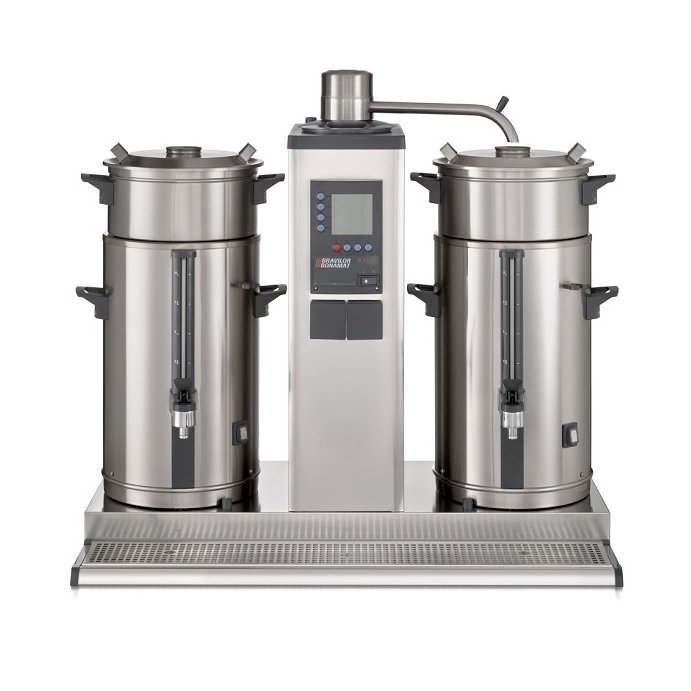
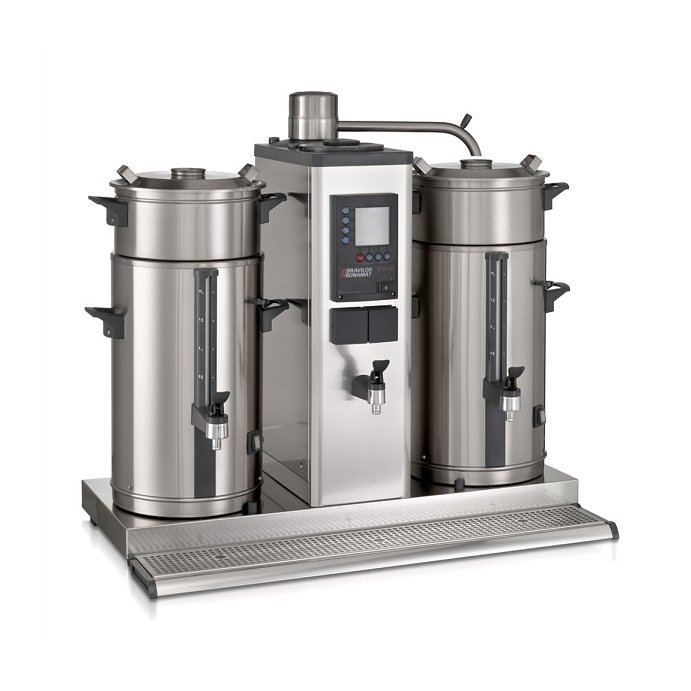
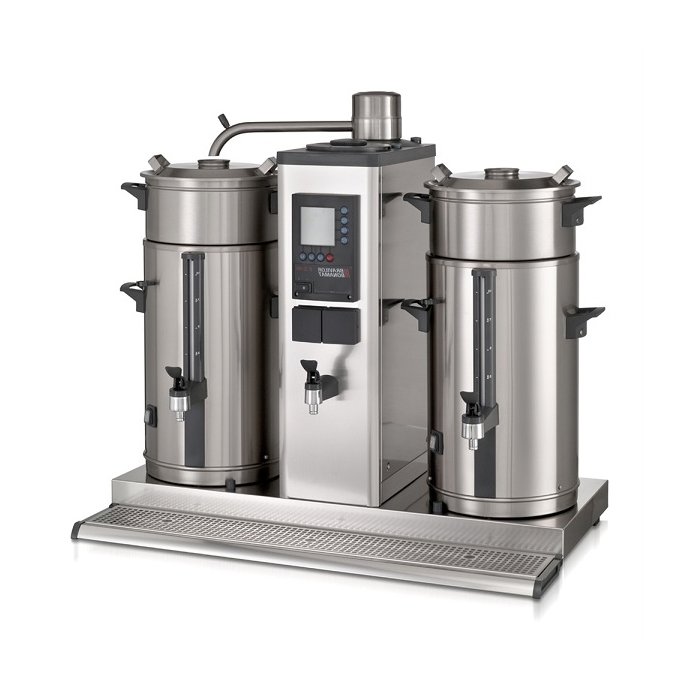
Some operations simply cannot be served from jugs. Feeding a stadium concourse, a hospital site, a large delegate conference or a factory shift change calls for coffee produced by the tens of litres, held ready and dispensed at speed. The Bravilor B20 round filtering machine sits at the top of the bulk brewing range and is built for exactly that scale of demand.
Two 20 litre containers
Two 20 litre containers give a substantial holding capacity, brewed in bulk from a mains water connection so there is no pause for filling. Coffee is produced into the containers rather than onto hotplates, which keeps it held cleanly and allows a container to be moved to a secondary serving point while the machine carries on working.
The hot water tap
A separate tap handles tea and any other boiling water requirement, which means one machine can underpin an entire hot drinks operation. Milk is dealt with on the serving table using fresh and plant options rather than by any equipment.
Is your peak genuinely this big?
Realistically this is a machine for institutional and event catering rather than a small cafe. The test is not your annual coffee spend, it is whether hundreds of people arrive at the same table within the same few minutes. That pattern is what justifies the capacity, and it is worth measuring properly before you buy, because a machine of this size is unforgiving of an overestimate. Our guide to sizing by the cups per hour you genuinely serve is the right place to start.
Key specification
- Two 20 litre coffee containers for very high volume service
- Round filtering system brewing large batches in one cycle
- Separate hot water tap for tea alongside coffee
- Mains water connection required for continuous bulk brewing
- Containers designed for holding and dispensing rather than reheating
- Containers can be carried to a satellite serving point
- Heavy-duty commercial construction for demanding sites
- Two-year warranty behind the build
Getting it installed
Plan the installation properly. This machine wants a mains water connection, drainage access and enough counter or bench depth to work around the containers safely, with room to lift a full container clear without reaching across anything hot. Check the electrical supply with us in advance rather than on the day, and think about the route from the delivery door to the final position while you are at it. Decide early whether containers will travel to satellite serving points, because that changes where the machine should live: next to the kitchen door beats a decorative spot behind the counter every time.
The blend carries the whole thing
Bulk brewing puts unusual weight on the coffee itself, because there is no barista and no milk texture to hide behind. A blend that holds up as it sits, brewed to a consistent dose, is the difference between coffee people come back for and coffee they abandon half-drunk. Choose one you are happy to drink black and buy it in quantities that turn over quickly, because a brewer this size gets through coffee faster than anything else on site. Our commercial coffee bean range is the place to start. The hot water tap covers tea and instant drinks from the same machine.
Who runs it
Staffing is efficient at this scale, as a single operator can brew ahead while a serving team works the counter. Training is short and the tasks are physical rather than technical, but the containers are substantial when full, so brief the team on safe lifting and keep the transfer route clear.
Brew to a written schedule
Written timings pinned near the machine work better than instinct. Brewing to a schedule that matches the running order of the day is what keeps a large service ahead of the queue, and it is the habit that separates a calm conference break from a queue that never clears.
Cleaning, and what scale does at this volume
Routines should cover containers, seals and the brewing head, with descaling matched to local water hardness to protect a machine working this hard. At twenty litres a time, scale accumulates faster than on anything else in the building, so filtration on the incoming supply is a sensible investment rather than an optional extra. Build the clean into the shift rather than leaving it to whoever is last out.
When a B20 is too much machine
Stadiums, arenas and exhibition centres, hospitals and university catering, large works canteens covering shift changeovers and outside caterers running weddings, conferences and functions are the plumbed sites that serve hundreds of cups in a single window, and they are where the top of the range earns its place. If your peak is large but not stadium-scale, the twin 10 litre model covers most conference and canteen services with a smaller footprint and a shorter brewing commitment. If demand is spread rather than spiked, a pour and serve brewer serves it better with less waste. Compare the full range of commercial filter machines before committing to the top of it.
Reviews
There are no reviews yet.