
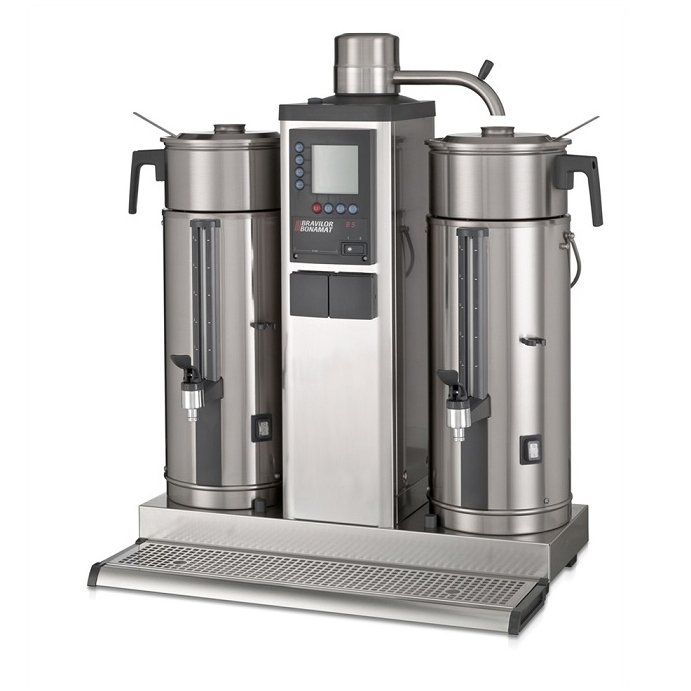
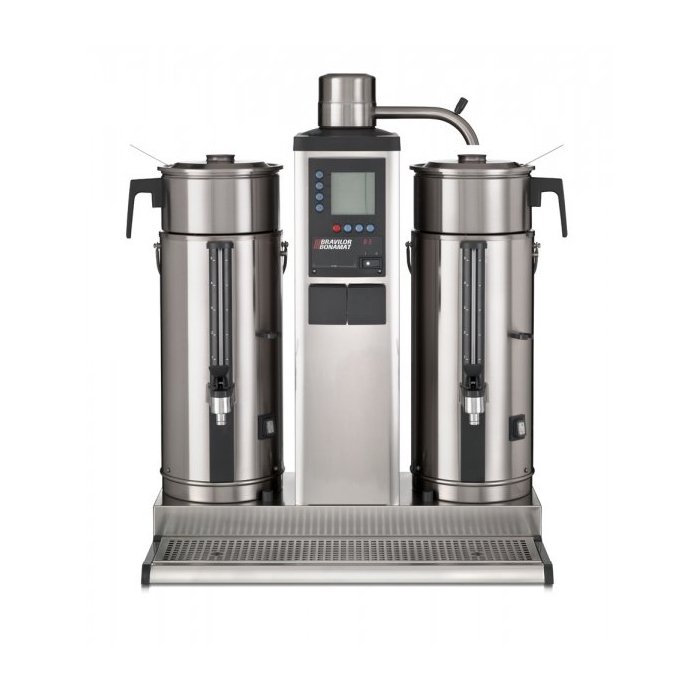
The Bravilor B5 round filtering machine is a plumbed brewer, and that single fact decides more about the purchase than anything else on the specification. Its position is set by where water can reach rather than where the counter looks tidiest, so the sensible order of work is to settle the services first and the layout second.
Plumbing, power and the bench it stands on
The bench needs to be solid and deep enough that a full container can be lifted clear without anyone reaching across it, with room to open the brewing head and somewhere sensible for waste water to go. A mains water connection is required for continuous operation. Confirm the electrical requirement with us before you commit to a spot, because relocating a plumbed brewer afterwards is joinery rather than a five minute job. We deliver machines across the UK; the final water and power connections should be made by a qualified engineer or plumber.
Brewing into containers rather than jugs
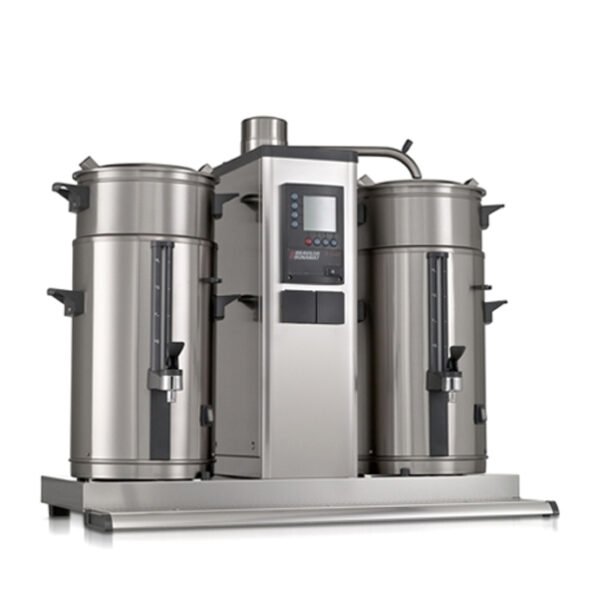
Catering at scale changes the maths on coffee. Rather than filling jug after jug, operations feeding hundreds of people need coffee produced in litres and held ready to dispense, and that is precisely the job here. Coffee is brewed directly into removable containers, held in bulk and dispensed on demand. You can specify the machine with one or two 5 litre containers depending on the pace of your service, and a separate hot water tap sits alongside for tea and other hot drinks. The plumbed supply keeps the cycle uninterrupted, which is what makes the difference during a conference break or a shift changeover when several hundred cups are needed inside a short window.
The specification in brief
- Round filtering system brewing into separate sealed containers
- Choice of one or two 5 litre coffee containers to match demand
- Separate hot water tap for tea served from the same machine
- Commercial construction for high-volume daily brewing, with containers that lift away for serving at a remote station
- Warranted for two years from new
Waves, not a trickle
Bulk brewers reward predictable peaks. Conference and exhibition venues, hospitals and care settings, education catering, factory and staff canteens and event caterers are the typical users, along with any hospitality venue where coffee is served in concentrated bursts. If your demand arrives in waves, you brew ahead, hold a full container and keep pouring while the queue moves. If instead it trickles across the day in ones and twos, a smaller pour and serve brewer will suit you better and waste far less coffee. Be honest about the shape of your day before you size anything.
Milk, tea and the serving table
Filter coffee is finished by the customer, and that is precisely why it scales: no milk to texture, no queue at a steam wand. Set jugs of fresh milk and a plant alternative on the serving table and you have covered most of a room without the machine being involved at all. The separate hot water tap does the rest, handling tea and instant options from the same footprint, so nobody has to wheel a second boiler in for a mid-morning break.
What a new starter has to learn
Very little. Loading the brewing head, starting a cycle and swapping a full container are tasks picked up inside one shift, which matters where catering teams are seasonal or agency-staffed. The discipline worth enforcing is procedural rather than technical: brew to the break rather than through it, dose consistently so the last cup tastes like the first, and never top up a part-used container with a fresh batch.
Water decides how long it lasts
The upkeep is honest work rather than skilled work. Containers, lids and seals are washed after every service, the brewing head and shower plate rinsed daily, and a deeper clean scheduled weekly. Water is the variable that settles the machine’s working life, because a bulk brewer passes more of it than anything else on site, so treating the incoming supply costs less over a few years than repeated descaling and the downtime that comes with it. Our daily, weekly and annual maintenance schedule sets out what to do and when.
When a different machine is the answer
If your peak outruns what the B5 holds, a twin-container model further up the same round filtering family is the logical step. If counter width rather than volume is the constraint, the single-container left or right hand version drops into a tighter run. And if what you actually sell is cappuccinos and flat whites made to order, a bulk brewer is the wrong tool altogether. The rest of the commercial filter coffee range runs from compact counter-top brewers up to the largest bulk units.
Reviews
There are no reviews yet.