
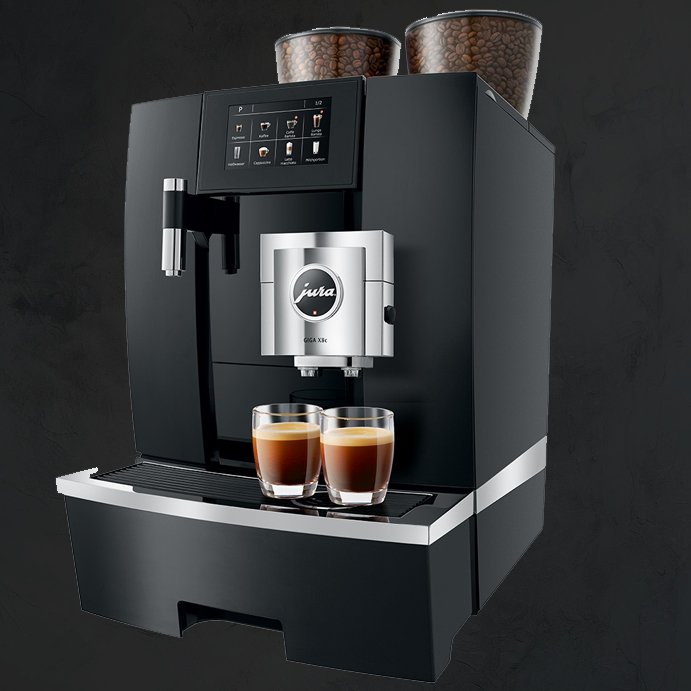
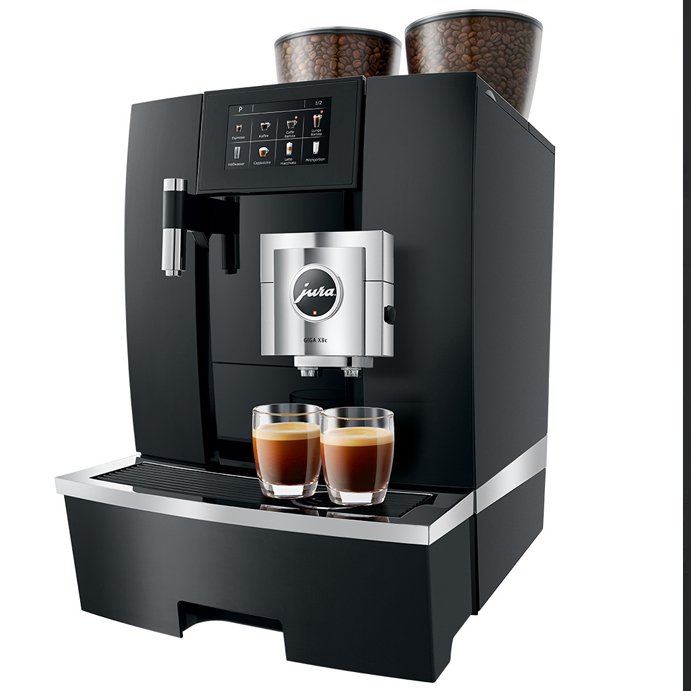
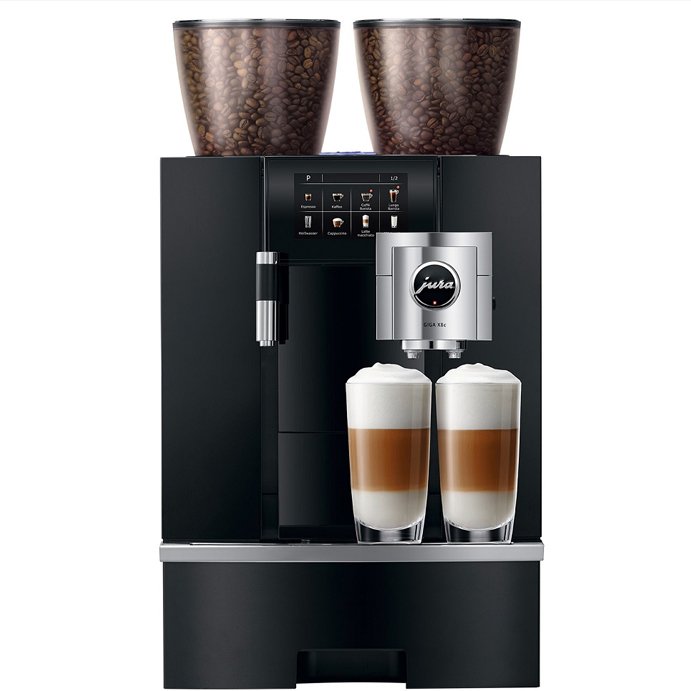
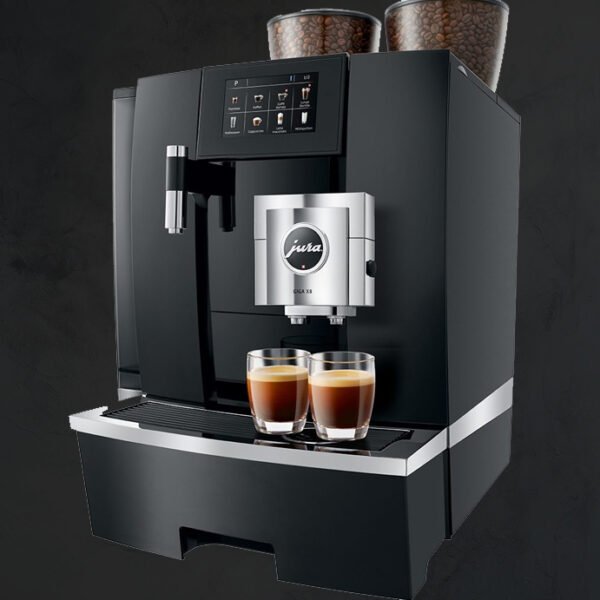
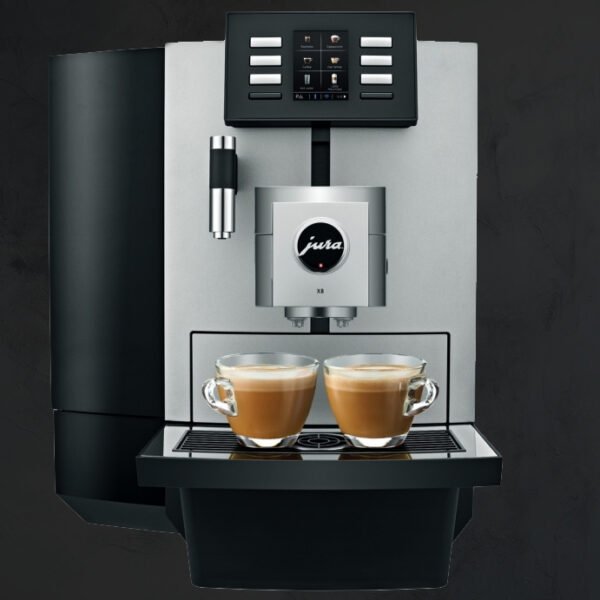
Plumbed-in operation is what separates a serious commercial bean-to-cup from a scaled-up domestic machine, and the Jura Giga X8c Generation 2 is built firmly in the former camp. Connected directly to the mains water supply, it is rated for up to 200 cups a day and never asks a member of staff to interrupt service to refill a reservoir. It sits at the heavier end of our commercial bean to cup machines, among the models built for a full working day rather than an occasional round.
Grinding and output
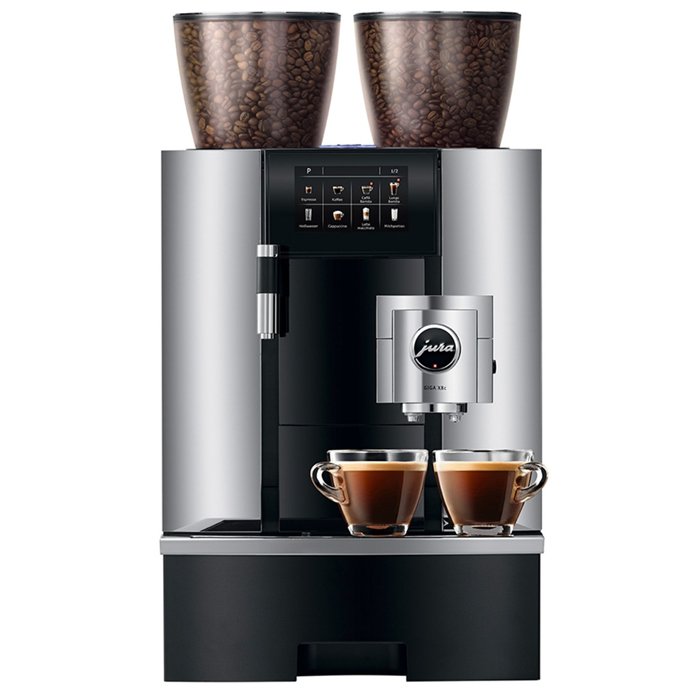
Two independent ceramic disc grinders sit behind two separate bean hoppers, so a decaf or a second blend can be loaded alongside your house roast and dialled in individually. Paired with the Generation 2 brewing system, that layout allows two speciality drinks to be prepared side by side, which is where the machine earns its keep during a conference break or a mid-morning office surge. The automatic milk system delivers fine-textured foam for cappuccino and latte macchiato at one touch.
Reading your own demand
The 200 cup rating is a ceiling rather than a target, and the more useful question is what your busiest twenty minutes look like. A site serving a steady trickle from nine until five strains a machine far less than one that stands quiet until a meeting breaks and then wants a room’s worth of drinks before the next session starts. The X8c is built for the second pattern, which is why twin grinders and back-to-back preparation matter more here than the headline figure. If you are unsure which shape your day takes, work through how to size a machine by cups per day first.
Key specifications
- Rated for approximately 200 cups per day in commercial use
- Mains water connection, supplied complete with a water filter kit
- Two ceramic disc grinders with two separate bean hoppers
- Automatic milk system producing fine milk foam without manual steaming
- Colour display with programmable drink selections and portion sizes
- Available in aluminium black or chrome finish
Siting it, and getting water to it
The plumbed connection is the part that needs planning, and it is far easier to organise before a counter is built than after. Allow depth for the machine, clearance above so the hoppers can be filled without dragging the unit forward, and room either side for cups, a waste bin and a milk fridge. Treat the electrical supply as you would any commercial appliance rather than assuming a spare socket will cope. The plumbed feed and filter kit mean water hardness is managed properly, which protects the boiler and keeps the taste consistent, so in a hard water area the filter changes are the one job worth diarising.
Milk, and what it puts on the menu
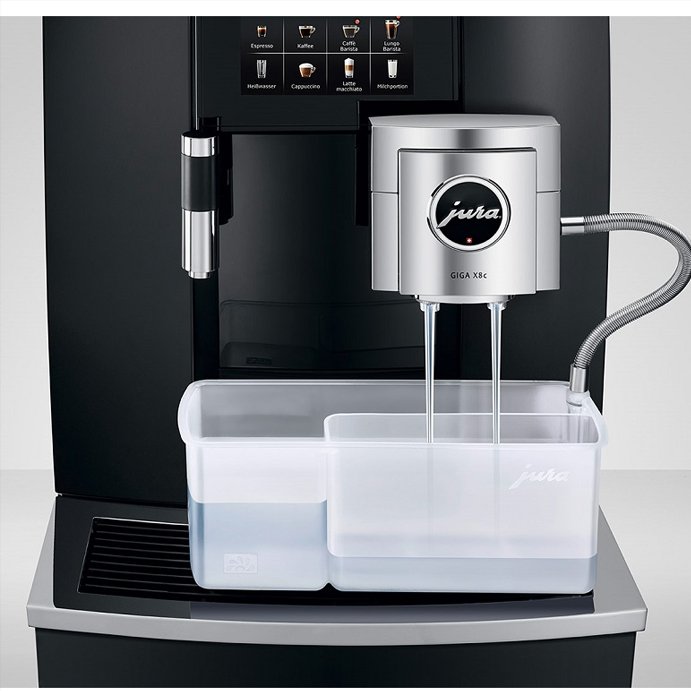
The automatic milk system is what opens up the drinks list. Without one, a site is limited to black coffee and whatever gets poured from a jug afterwards. Two practical consequences follow. Milk has to live near the machine and stay chilled, which usually means a small fridge beside or beneath it. And the milk path needs rinsing and cleaning to a schedule, which the machine prompts for rather than leaving to anyone’s judgement.
Who ends up running it
Offices, staff canteens, hotel breakfast areas, dealerships and conference venues are the natural setting. Automated rinsing runs at start-up and shutdown, and the machine prompts for its cleaning and milk-system cycles rather than leaving it to memory, so upkeep sits comfortably with a receptionist or facilities team rather than requiring a trained operator. Day to day it is grounds emptied, tray wiped, beans topped up and prompts answered. Nobody has to learn to steam milk.
When something else fits better
If the site cannot take a mains water connection, or plumbing would mean lifting flooring, a tank-fed machine is the more realistic answer even at lower capacity. If demand is modest and spread thinly, this is more machine than the building will use. And if you want somebody making drinks by hand in front of customers, a traditional espresso setup is a different proposition altogether.
Good fit for
- Offices and staff canteens with a defined morning and afternoon peak
- Hotel breakfast service, where drinks have to keep moving
- Conference and training venues serving a room inside a short break
- Dealerships and showrooms where the machine faces customers
- Sites wanting decaf permanently available without swapping hoppers
The choice of aluminium black or chrome matters more than it sounds when the machine stands in a client-facing area, and the two hoppers mean a decaf drinker is never turned away. Weighed against the rest of the Jura bean to cup range, the deciding factors are usually water supply and the shape of your peak. Delivery and installation explains what happens on the day.
Reviews
There are no reviews yet.