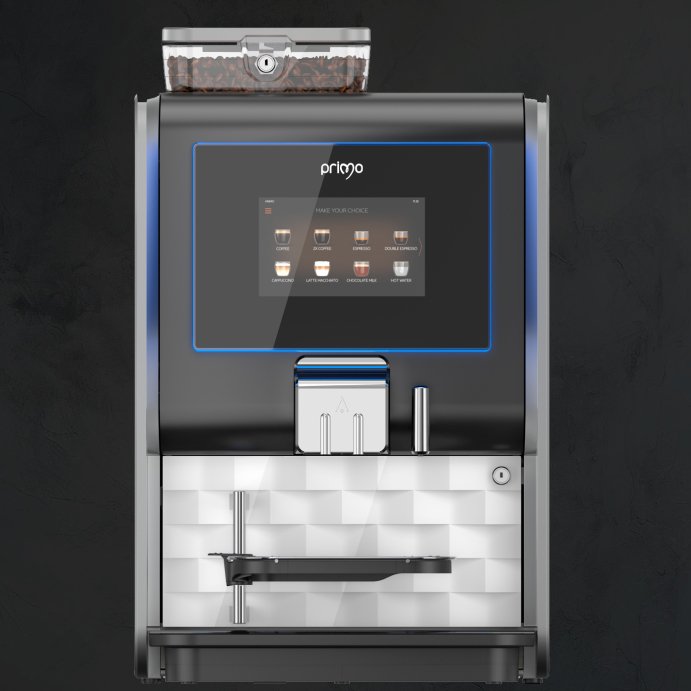
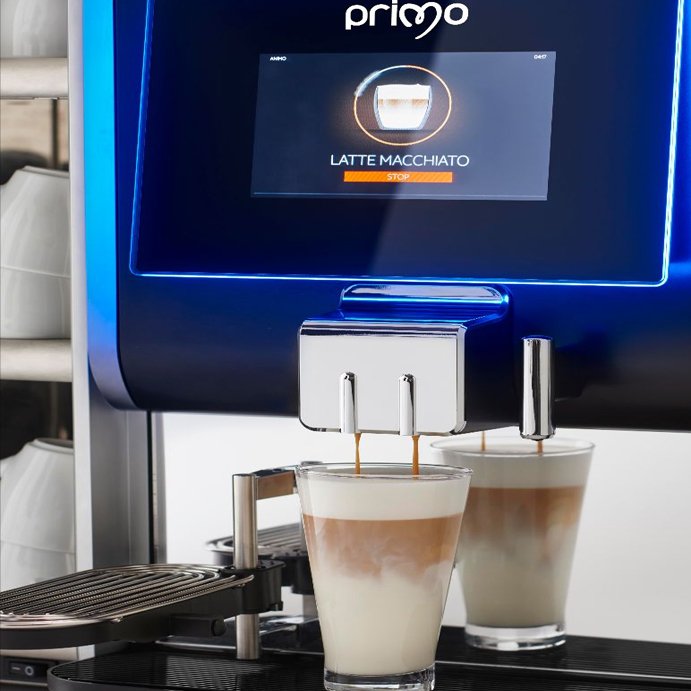
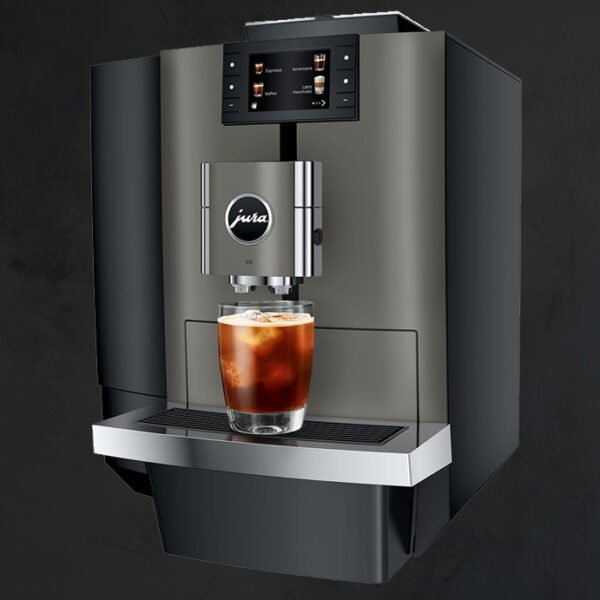
Operators who care how their coffee tastes, but cannot justify a barista behind a machine, are exactly who the Prima is designed for. It grinds beans for each order and builds the drink to a stored recipe, producing the classic espresso menu with proper frothing at a single touch, all from a commercial cabinet measuring only 60cm across. This is a machine specified for trading conditions, not a domestic unit dressed up for the counter.
Extraction and menu
Fresh grinding immediately before brewing is what allows the machine to draw the oils and aromatics out of the bean, and it is the main reason coffee from a bean to cup system tastes so different from a pre-ground alternative. From that base the Prima pours espresso, cappuccino, latte, americano, mocha and hot chocolate, with selection handled through a clear touch interface that guides customers rather than confusing them. It sits comfortably in the commercial bracket, handling steady all-day demand.
Why it works commercially
- Fresh bean grinding before every extraction for maximum flavour
- Compact commercial footprint at 60cm wide
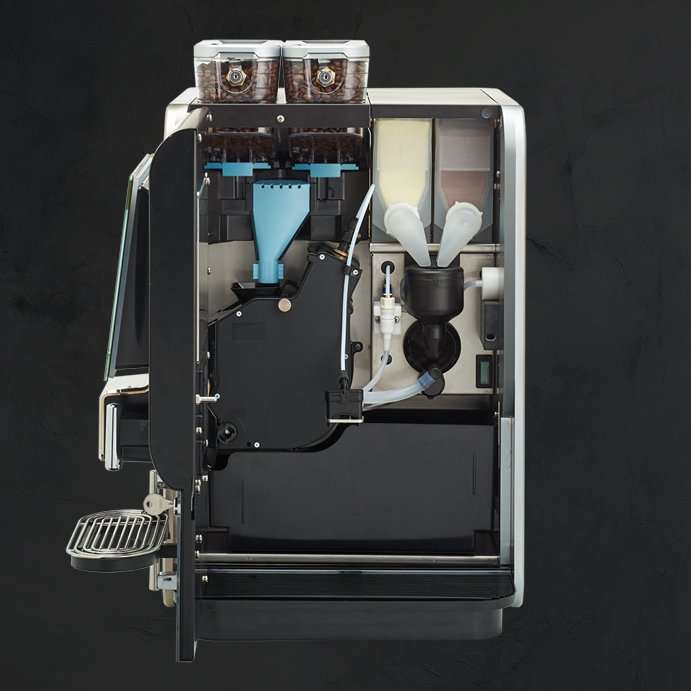
- One or two bean hoppers to cover decaf or a second roast
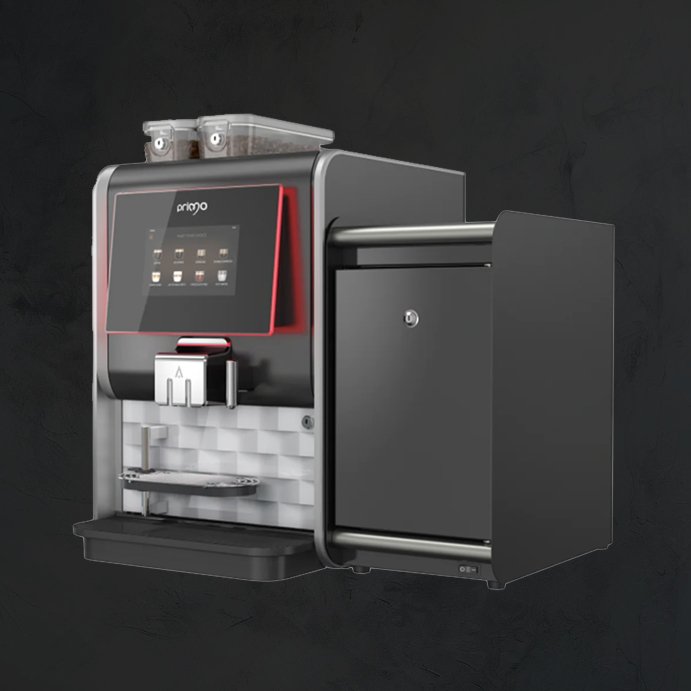
- Two ingredient canisters, or a fresh milk build supplied with a fridge
- Touch selection across espresso, cappuccino, latte and hot chocolate
- Hygienic design with cleaning routines that are quick to complete
Trading pattern it suits
Cafés, restaurants, offices, hotels and self-service environments will find the Prima capable of carrying the coffee offer on its own, and that phrase is deliberate: it is specified to be the only coffee machine on site, not a back-up to something bigger. Steady demand spread across a long trading day is where it is happiest. A venue whose entire day arrives in two violent bursts should either accept a queue at those moments or plan for a second serving point.
Installation and services
Sixty centimetres of width is easy to find; the harder questions are depth, the height available for filling hoppers and canisters, and where the fridge goes if you take the fresh milk build. Agree the power supply and the water arrangement for your configuration in advance, keep the machine off shared and overloaded circuits, and think about the customer’s approach as well as the operator’s, since a self-service position needs room for someone to stand, select and collect without blocking a walkway. Final connections are a job for a qualified engineer.
Fresh milk or ingredient canisters
Both builds pour the same menu, but they run differently behind the scenes. Canisters mean powder, ambient storage and a short closing routine, which is why offices and unattended sites tend to choose them. The fresh milk build, supplied with its fridge, gives you the texture that makes a cappuccino worth its price and is the right answer wherever customers are paying café money. Match the ingredient configuration to how the site prefers to work rather than to a spec sheet.
Staff, shifts and consistency
Where staff rotate frequently, automated recipes remove variation in quality between shifts, and the cleaning routine is short enough that it actually gets done. That consistency is worth more commercially than any single feature: the drink a customer buys on Tuesday from a new starter is the drink they bought on Saturday from your supervisor, and repeat trade is built on precisely that.
Cleaning, water and service planning
Plan servicing around your busiest periods rather than around a date, so an engineer is never working through your morning rush. The hygienic design keeps the daily tasks quick, and the discipline to want is a fixed closing routine plus proper water treatment, which does more for machine life than any amount of descaling after the fact. Our maintenance schedule sets the rhythm out clearly.
Where a different machine wins
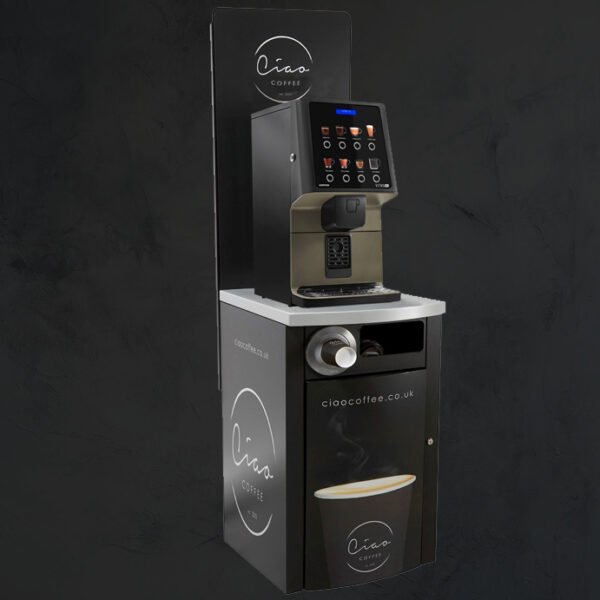
If you need two drinks leaving the machine at once, look at a model built to dispense in pairs. If the site wants a traditional espresso bar with a visible barista and hand-poured latte art, this is the wrong category altogether. And if volume is modest and the budget tight, a smaller cabinet from the Ciao bean to cup range will serve you honestly. If you would rather talk it through, our team will take you through the options.
Good fit for
- Cafés and restaurants wanting one machine to carry the coffee menu
- Hotels serving guests across a long day without a barista
- Offices and staff areas with frequent staff turnover
- Self-service counters in customer-facing retail
- Sites choosing between powder and fresh milk on operational grounds
Reviews
There are no reviews yet.