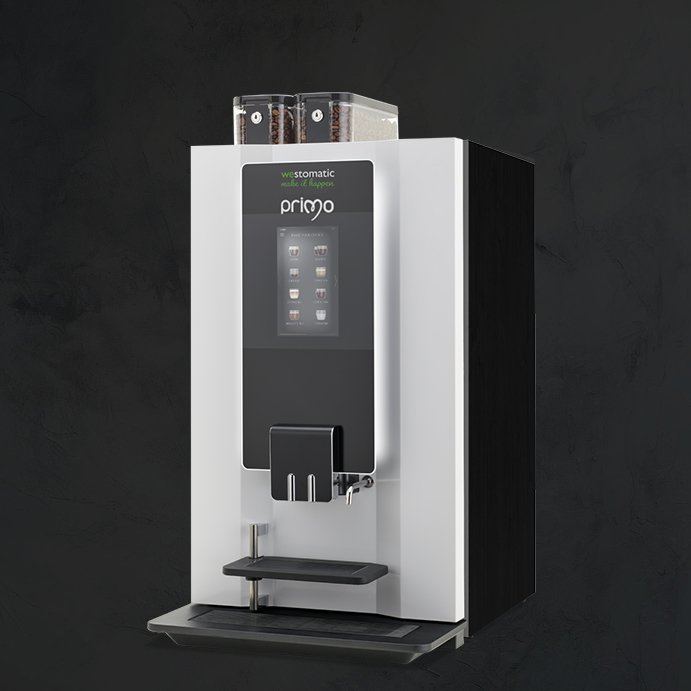
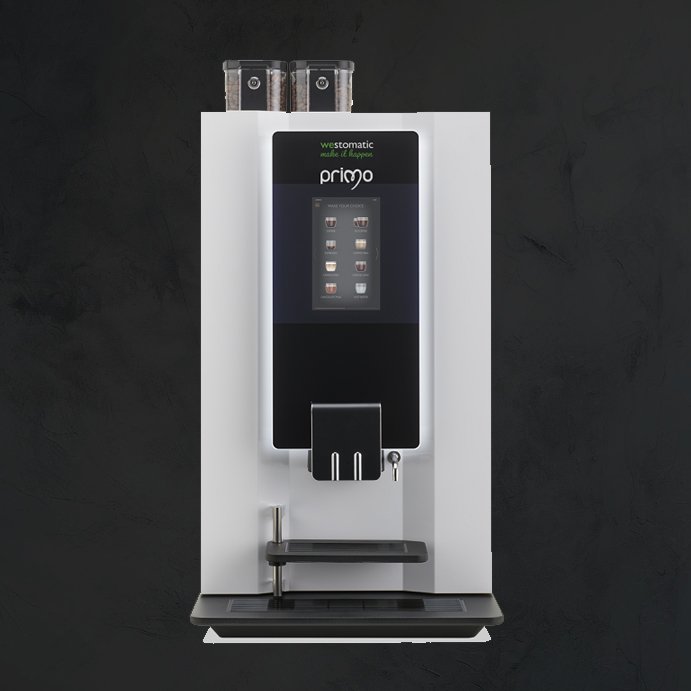
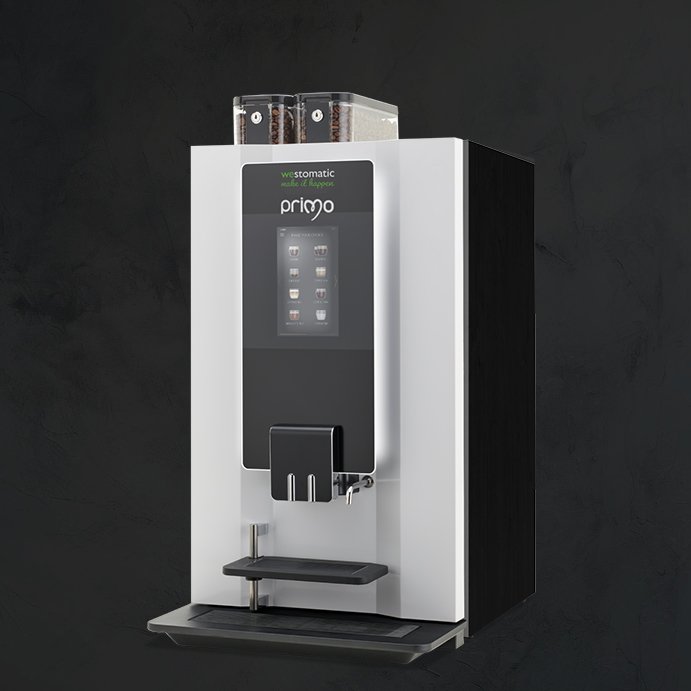
The decision that shapes everything else about a Primo X is milk. The powder option keeps restocking simple for sites without a reliable milk delivery, needs no chilled storage and shortens the daily routine, which is why it suits offices and remote units. The fresh milk build, supplied with its own fridge, suits venues where drink quality is being judged, gives you cappuccinos and lattes that stand comparison with a café, and in exchange asks for stock rotation and a milk clean every day without exception. Choose against how the site really operates, not how you would like it to.
60cm wide
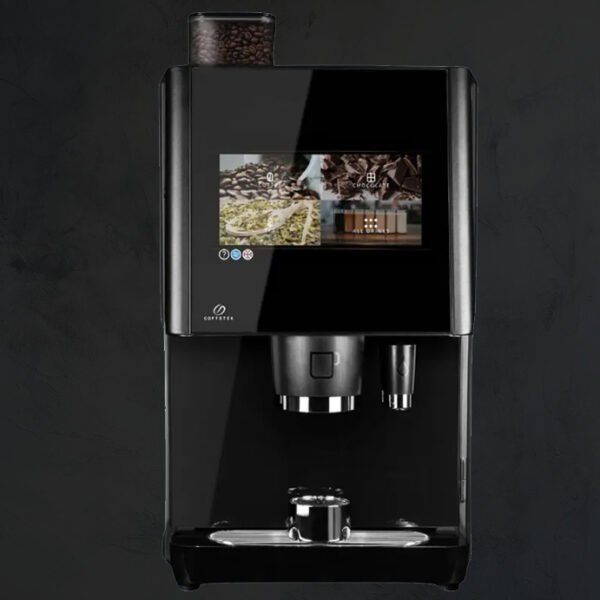
Narrow counters are the reality in most small commercial kitchens, and the Primo X is built around that constraint. At 60cm wide it takes up less room than many under-counter fridges, yet it still grinds beans to order and pours the espresso-based drinks a customer would expect from a much larger machine.
Specified the way the site needs it
Buyers rarely get this much choice at this size. Run a single bean hopper or two, the second being useful for decaf or an alternative roast. The grinder, brewing unit and frother share the work between them, and the machine can dispense two drinks simultaneously, which is what stops a small machine feeling slow at peak. That flexibility also means the same model can be specified differently across several sites without retraining anyone.
Specification at a glance
- Compact commercial cabinet measuring just 60cm wide
- Choice of one or two bean hoppers to cover a second coffee
- Two ingredient canisters, or a fresh milk option with fridge included
- Simultaneous dispensing of two drinks during busy periods
- Integrated grinder, brewing unit and milk frother
- Display-based drink selection with consistent stored recipes
- Two-year warranty across either specification
- Suited to offices, small cafés, hotel breakfast areas and retail counters
Twin dispensing decides whether it copes
Sites whose demand bunches into a breakfast sitting or a mid-morning break get far more out of this machine than the raw footprint suggests, because two cups leave it while a single-spout machine is still on its first. That covers offices and staff kitchens with a concentrated morning peak, hotel breakfast areas serving a sitting rather than a trickle, and small cafés where counter width is the binding constraint, particularly where the space available was never designed for coffee equipment. Beyond that pattern it is a steady all-day performer rather than a machine for continuous queues.
Fitting 60cm into a real layout
The stated width is only half the story. Check depth against your counter, allow clearance above for the hopper lids and canisters, and remember that a fresh milk build needs its fridge sited within reach of the milk line and somewhere that will not be blocked by deliveries. Settle the electrical supply before the machine arrives, plan where waste and rinse water go, and have the final connections made by someone qualified. A machine that ends up in the wrong place tends to stay there.
Beans, roast and grinder wear
A second hopper is only worth having if you fill it with something people ask for, so decide early whether that is decaf, which is usually the answer on a retail counter, or a different roast profile. Bean choice also affects how hard the grinder works and how often the brewer needs attention, and very dark, oily roasts are the usual culprit behind a sticky hopper. Our guide to choosing beans for a bean to cup machine covers what to look for.
Filters, descaling and the closing routine
- Match filter changes and descaling to the usage the machine actually sees rather than a fixed calendar
- Expect both sooner on a busy site with hard water than in a quiet one in a soft water area
- Build the daily wipe-down and clean cycle into the closing routine so it is never anybody’s decision
Keep a service arrangement in place alongside that: our daily, weekly and annual maintenance schedule is a sensible starting point.
When to look elsewhere
If your counter can spare more width, a larger cabinet buys hopper capacity and a bigger waste bin, which means fewer interruptions during service. If the site is genuinely low volume, a simpler compact model will cost less and do the job. The rest of the commercial bean to cup range sits either side of it, and a multi-site operator can specify one model two ways across the estate.
Reviews
There are no reviews yet.