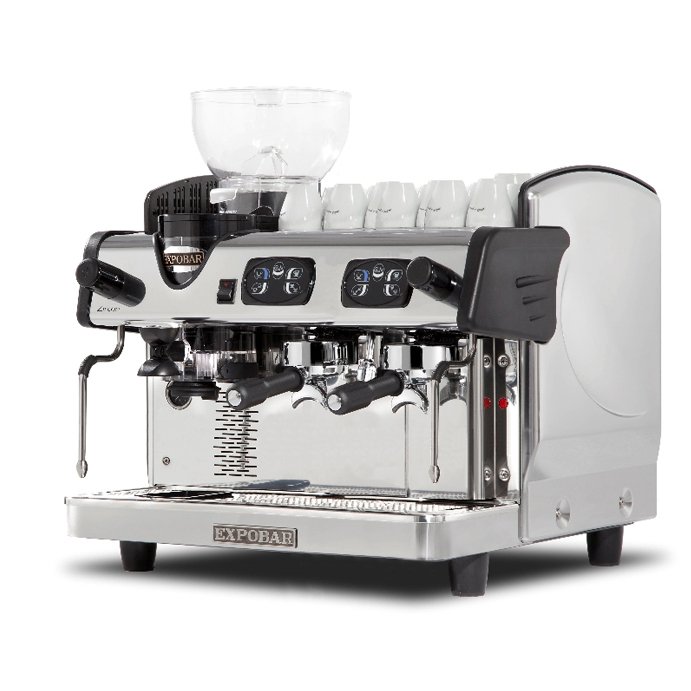
Restaurants running a full dining room face a particular problem: coffee arrives in one concentrated wave at the end of service. The Expobar Zircon 2 Group Plus is specified for that kind of demand, covering venues of up to around 125 covers and daily volumes between roughly 50 and 300 coffees.
Why that range is so wide
Restaurant coffee is rarely spread evenly. A dining room of 125 covers can turn into a wave of drinks in a quarter of an hour when the last main courses clear, which is a far harder ask than three hundred drinks trickling through a café. Read the stated figures against the shape of your evening, not against a daily total.
The heat exchanger
A heat exchanger sits at the core, drawing brew water through the boiler so espresso temperature stays stable even while the steam wands are working hard. That is exactly the pattern a restaurant peak demands: brew temperature holds while both wands are running for milk, so the tenth cappuccino of the wave is the same as the first and nothing has to wait for the boiler to catch up. Consistent extraction plus steam on demand is what separates genuine commercial equipment from a scaled-up domestic machine.
Core specification
- Two group heads for simultaneous espresso service
- Heat exchanger boiler for stable brewing while steaming
- Electronic switchboard with programmable drink selections
- Twin steam wands for cappuccino and latte milk
- Separate hot water outlet for teas and americanos
- Stainless steel construction suited to daily commercial use
- Two-year warranty on every new machine
- Specified for venues of up to around 125 covers and roughly 50 to 300 coffees a day
Programming, not memory
The electronic switchboard gives precise, programmable control over each drink, so shot volumes stay identical across shifts. Because the programming is held in the machine rather than in a barista’s memory, standards hold up on quieter shifts as well as busy ones, and front-of-house staff who are not baristas by trade can still send out a consistent drink. In a restaurant where the person making the coffee changes nightly, or a bar taken over by a different team each shift, that is worth more than anything else on the list.
Two wands, two pairs of hands
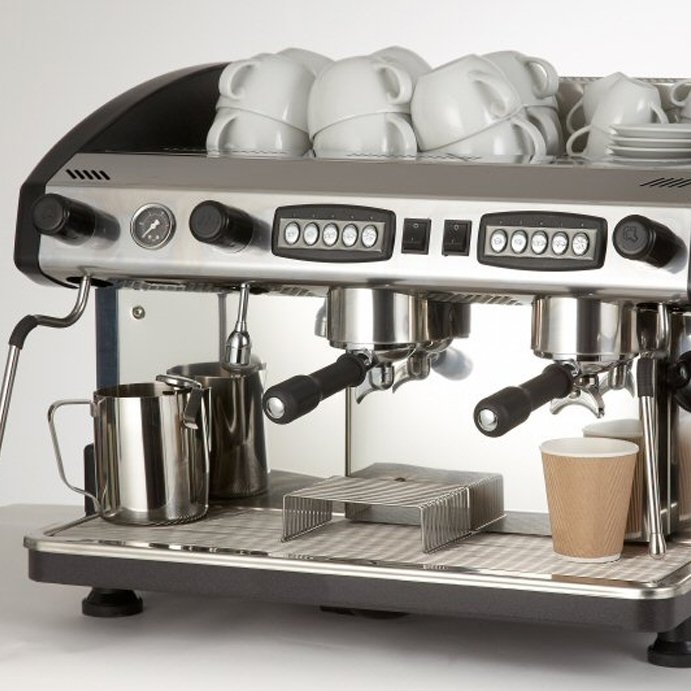
Twin steam wands mean two people can finish drinks at once, and the separate hot water outlet keeps teas, americanos and hot water for the pass off the groups entirely. In practice that lets a restaurant, gastropub or hotel lounge run a full after-dinner list, espresso and macchiato alongside cappuccino, latte and pots of tea, without the coffee station becoming a queue in its own right. Keep a second jug for oat and other alternatives; they steam differently and a dedicated jug avoids remaking a drink at the worst possible moment.
Where the machine lives
This is a plumbed machine and wants planning: a mains water connection, a drain for the tray waste and an electrical supply specified for the model, all agreed before the machine arrives. In a restaurant the siting question is usually whether it goes behind the bar or at a service station, and the answer should follow the walk, not the aesthetics. The stainless steel body keeps everything looking sharp wherever it ends up on a customer-facing bar.
Water treatment belongs in the same conversation
Put it with the pipework rather than adding it afterwards, because a heat exchanger boiler in a hard-water area will scale quietly and expensively. How filtration protects a commercial boiler explains what to specify and why.
The cleaning order
Backflush the groups daily, wipe and purge the steam wands after every jug, soak baskets and portafilters weekly, and keep the hot water outlet and drip tray clear.
Servicing between the bursts
Book scheduled servicing so seals and valves are replaced on a plan. Equipment used in short intense bursts is the easiest of all to neglect, because it spends most of the day looking clean and idle.
Against the machines either side of it
Against a three-group machine, the Zircon 2 Group Plus assumes one or two people making coffee rather than a dedicated barista team. Against a compact two-group it gives you heat exchanger stability and a second wand for heavier peaks, which is why it suits cafés with sharp, concentrated trade as readily as it suits a dining room. It is also worth comparing to an automatic machine if your staffing is thin at the end of service; otherwise the rest of the commercial espresso machines we supply will show you where the step up or down sits. Specify grinders, tampers and the bar equipment around it at the same time, because a heat exchanger machine is only as consistent as the grind feeding it.
Reviews
There are no reviews yet.