
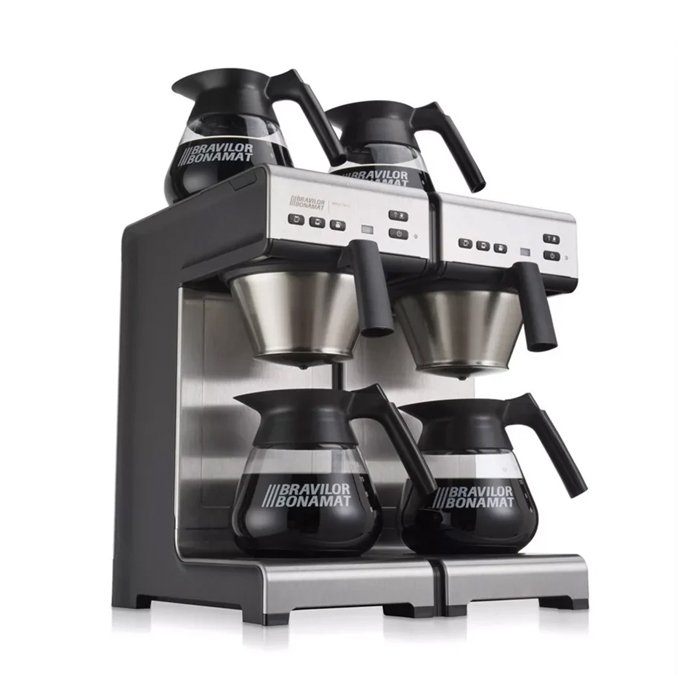
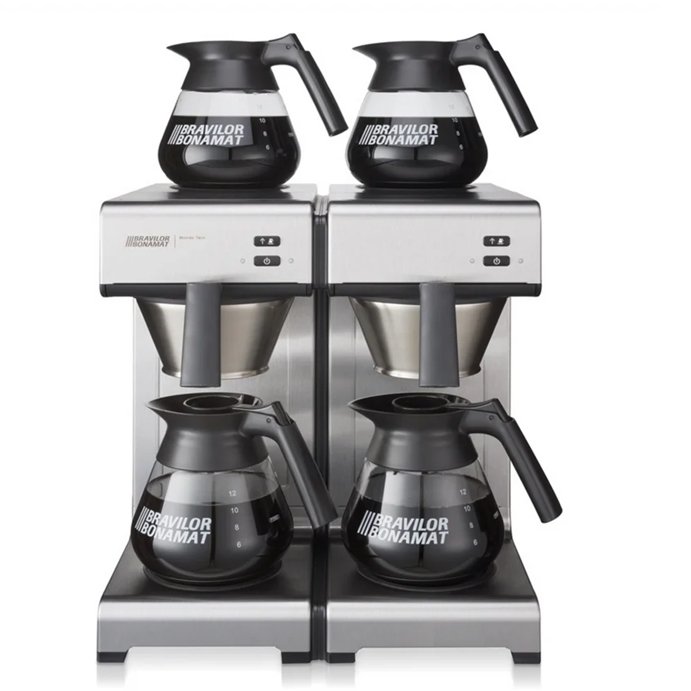
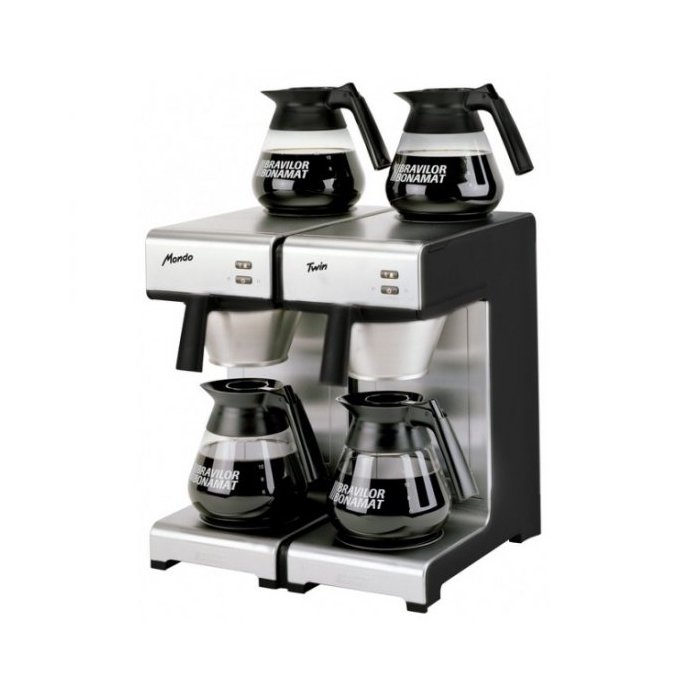
Speed is the whole argument for a pour and serve filter machine, and the Bravilor Mondo Twin makes that argument well. Two brewing systems, four hotplates and four jugs produce up to 224 coffees per hour and hold as many as 48 ready to pour, which keeps a busy counter supplied through the periods when nobody has time to wait for a brew cycle.
How it works through a rush
Two stainless steel filter pans allow one system to brew while the other is being served, and the four hotplates mean full jugs are held at temperature rather than being poured cold. Preparation is quick and deliberately uncomplicated: load the pan, insert a paper filter, add ground coffee and start. For staff working a morning rush, that simplicity is worth as much as the headline hourly figure, because there is nothing to get wrong under pressure.
- Capacity of 224 coffees per hour from twin brewing systems
- Holds up to 48 coffees ready for immediate serving
- Four hotplates, four jugs and two stainless steel filter pans in continuous rotation
- A two-year warranty comes with it
A socket, not a plumber
The pour and serve format keeps the entry requirements low, as there is no plumbing to arrange. That single fact opens up positions a plumbed brewer could never take: a pop-up in a marquee, a seasonal counter, a breakfast room on the first floor, a market stall. Give it a level surface with clearance around the hotplates, a socket within reach, and a sensible path to a sink for filling and washing. Because nothing is fixed, you can move it when the counter layout changes, which is worth more than it sounds in a venue that reconfigures for events. The finish is good enough for a visible front-of-house position, so it does not have to be hidden away either.
Training, dosing and the two rules that hold quality
There is no specialist barista skill needed to operate it, which is the point, and a new starter can be brewing confidently within their first shift. Where consistency slips is dosing. Set a measured scoop, agree how long a jug may sit before it is tipped, and make the rotation of the four jugs a habit rather than a judgement call. Those two rules are the whole of quality control on a pour and serve machine. Beyond them, day-to-day care means washing jugs and filter pans, wiping down hotplates and descaling in line with your water hardness. Hotplates are the part most often neglected and the part customers see, so build them into the close-down routine. In a hard water area, treating the water you fill it with pays for itself in fewer descales and a cleaner cup, since anything in the water ends up in the coffee.
Milk, takeaway and where the money is
Filter coffee is poured and finished by the customer, so milk stays a service-table question rather than an equipment one. Dairy in one jug and an oat or soya option in another will satisfy almost every order. What the format really unlocks is takeaway: brewed coffee poured straight into a cup is the fastest, highest-margin drink most counters sell, and the numbers behind that are worth understanding before you set your prices. Our guide to what a takeaway cup actually earns you breaks the cup, lid and coffee cost down per serve before you settle on a price.
The counters it belongs on
- Busy cafes with a strong filter trade running alongside espresso drinks
- Delis and bakeries where black coffee is a volume seller
- Hotel breakfast counters working a defined morning peak
- Garden centre restaurants serving steadily through the day
- Staff restaurants and canteens where everyone arrives at once
- Venues that need volume without any plumbing work
- Espresso-led sites offloading black coffee from the barista
That last one is worth dwelling on. Beside a traditional espresso machine, the Mondo Twin earns its keep as the volume workhorse, taking the straightforward black coffee orders off the barista so the groups stay free for milk drinks. It is at its best where trade is genuinely busy but the drinks are simple, and where a queue at eight in the morning would otherwise be waiting on a single brewer.
Weighing the alternatives
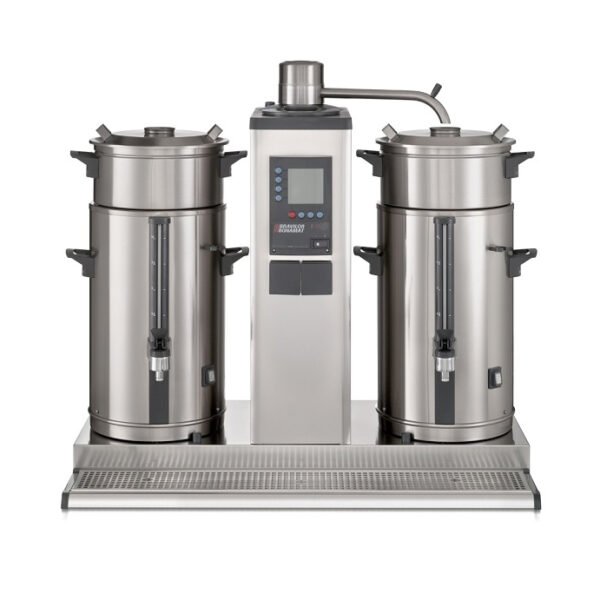
If your volume does not justify two systems, the single-brewer Mondo does the same job in a smaller footprint. If you serve coffee in concentrated bursts to hundreds of people rather than steadily across a morning, a plumbed bulk brewer will suit you better. Compare the full filter machine line-up to place it against both.
Reviews
There are no reviews yet.