
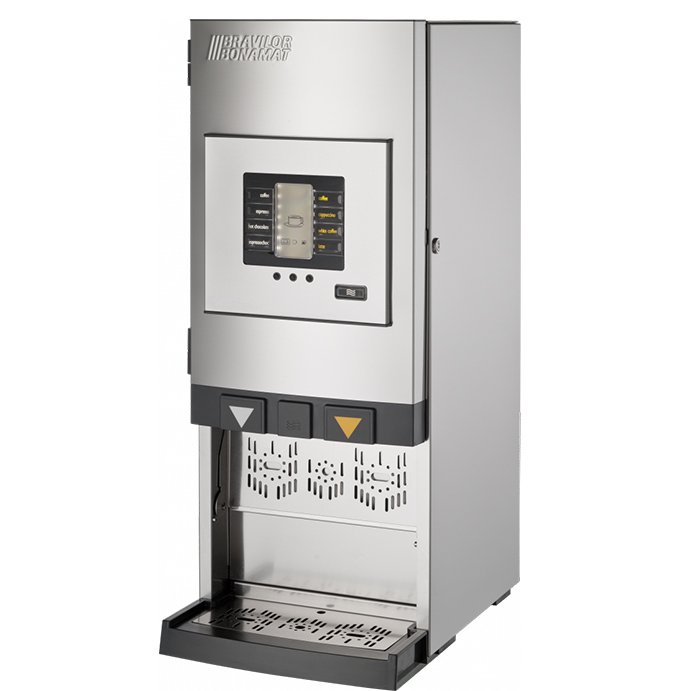
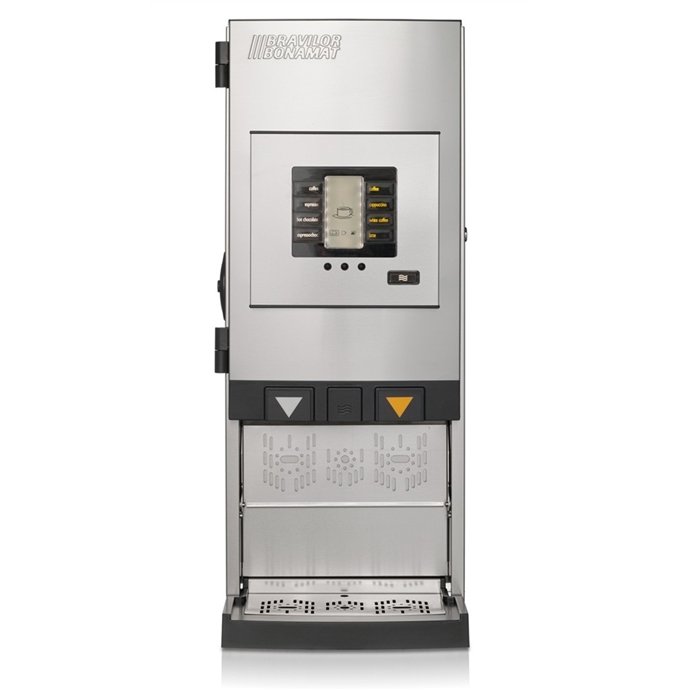
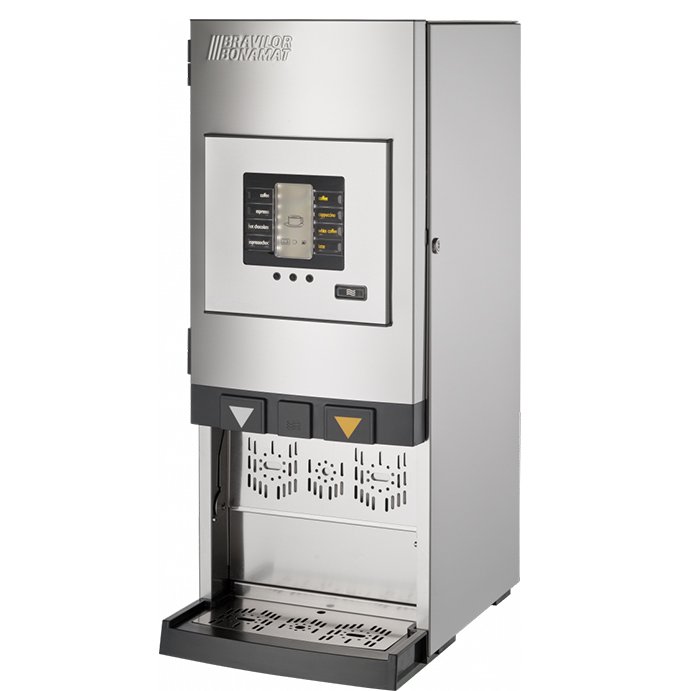
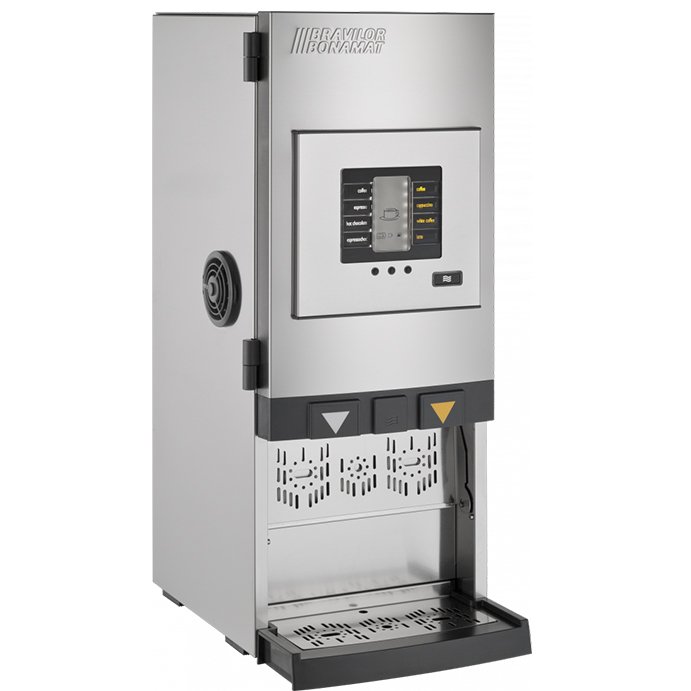
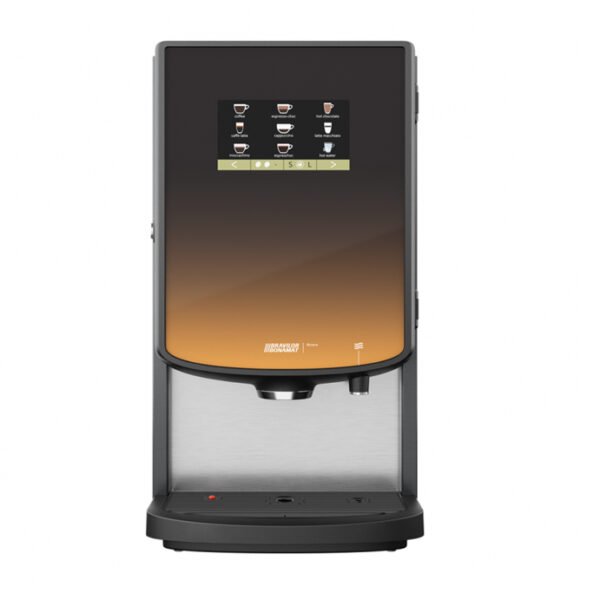
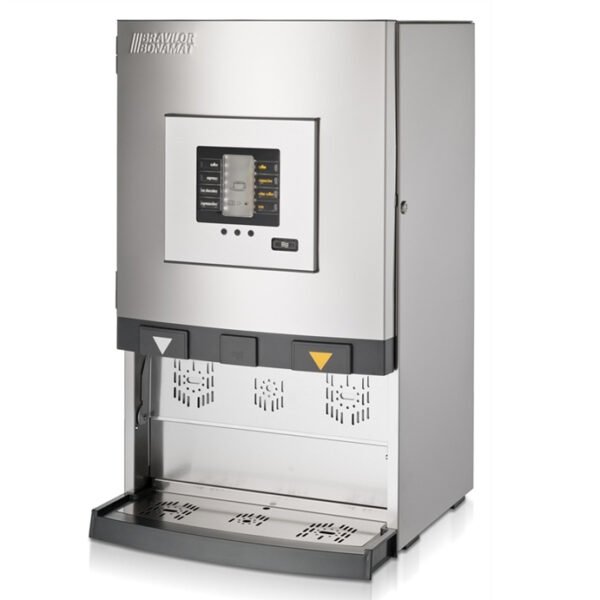
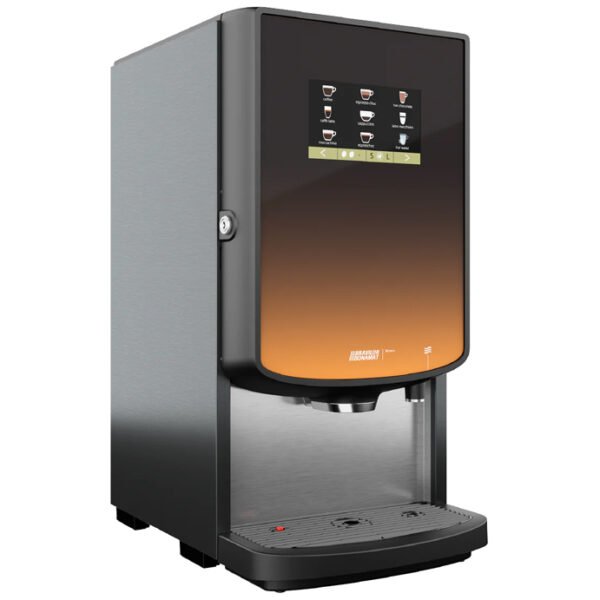
Volume without fuss is the brief here. The Bravilor Bolero Turbo 403 is an instant coffee and ingredient vending machine built for commercial use, serving a full hot drinks menu from four large canisters with no barista skill and no milk fridge involved.
Sites with a fixed rhythm get the most out of it. A factory where the whole floor breaks at once. A depot running shift changes overnight. A college corridor between lectures. A hotel service area where housekeeping and kitchen staff grab a drink on the move. In each case demand lands all at the same moment and there is nobody on the rota to stand behind a counter making it. The Turbo 403 absorbs that peak on its own, and it will keep drinks available outside staffed hours as well.
What Turbo dispensing actually buys you
Speed is the point of difference against a standard Bolero. Drinks are produced quickly enough that a queue at eleven o’clock clears instead of building. The canisters hold a useful reserve of ingredient, and the machine is plumbed into the mains water supply, so nothing has to be carried or topped up during the day. Between restocks it runs unattended.
Whether that speed is worth paying for depends on your worst ten minutes rather than your daily total, so it is worth working out how many drinks your peak actually has to absorb before you choose between this and a standard model.
- Four large ingredient canisters for extended running
- Mains water connection, with no manual filling
- Menu covering coffee, cappuccino, chocolate and more
- Commercial specification with straightforward front access for restocking and cleaning
- Backed by a two-year warranty
The plumbing decides the position
Because the machine takes a mains water feed, its position is settled by the pipework before anything else. Pick the spot where a feed can be run cleanly. Then check there is a power point in reach, and that the counter or stand can carry a commercial unit loaded with full canisters. Leave working room at the front, since restocking and cleaning are both done from that side, and leave headroom above so canisters can be lifted out without a wrestle. Somewhere for cups, a bin and a wipe-down surface alongside will do more for how the point feels in use than anything on the machine itself. Settle the water and power arrangements for that position before you order, and our delivery and installation guidance sets out what needs to be ready before the vehicle arrives.
Powdered milk, and being honest about it
Milk here comes from an ingredient canister, not a fridge, and that single fact shapes the whole operation. There is no milk line to sanitise at close, no chiller to find space and power for, and no stock going out of date in a warm corridor over a bank holiday weekend. The trade is in the cup. A powdered cappuccino is a reliable, warm, sweet drink that most staff are perfectly happy with, but it will not pass for a barista pour, so where coffee is being sold to the public and the quality of the cup is the product, a fresh bean machine will serve you better. This one is built to keep people supplied. Loading the four canisters to suit the site is where you win back some ground, and a strong instant plus a decent chocolate does more for staff opinion than any other change you can make.
Upkeep is light, but it is not nothing
Training is a handover, not a course. Anyone who can top up a photocopier can restock canisters, empty and rinse the drip tray, and wipe the dispense area at the end of the day. Nothing inside the machine grinds and nothing chills, which is why the routine that keeps a commercial machine reliable is so much lighter on this format than on fresh bean equipment. Cost per cup is predictable and there is no grinder to service, which is most of the practical case for an ingredient machine over a fresh bean one.
Set the restocking routine on day one
Nominate one person per shift to own the machine, because an ingredient machine fails on neglect long before it fails mechanically. Give them a fixed point in the day to check canister levels, and have them restock before the break rather than during it. In a hard water area, plan for limescale protection on the incoming feed from day one rather than after the first fault. Do that, site it near a water feed, and it will look after itself.
Reviews
There are no reviews yet.