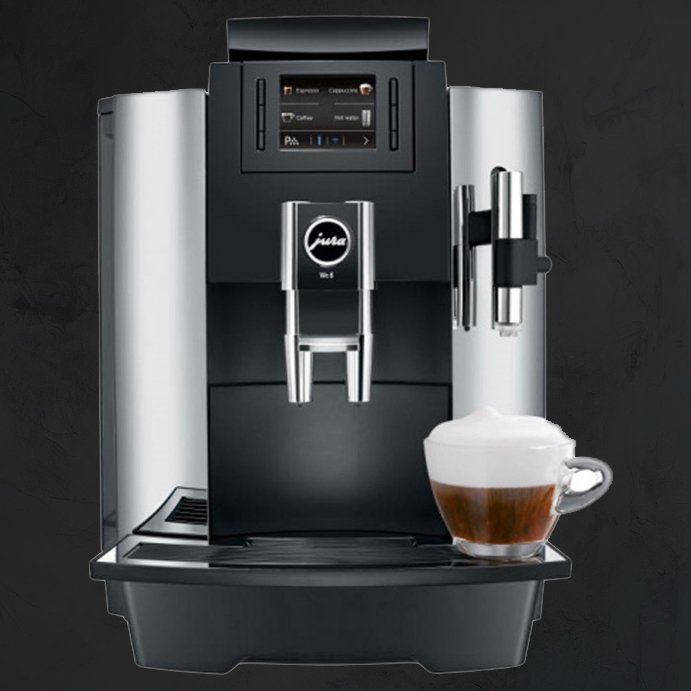
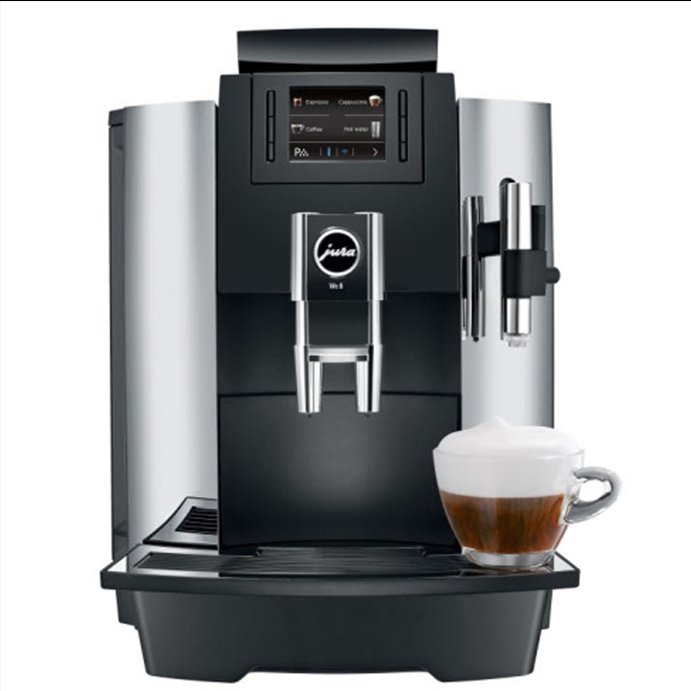
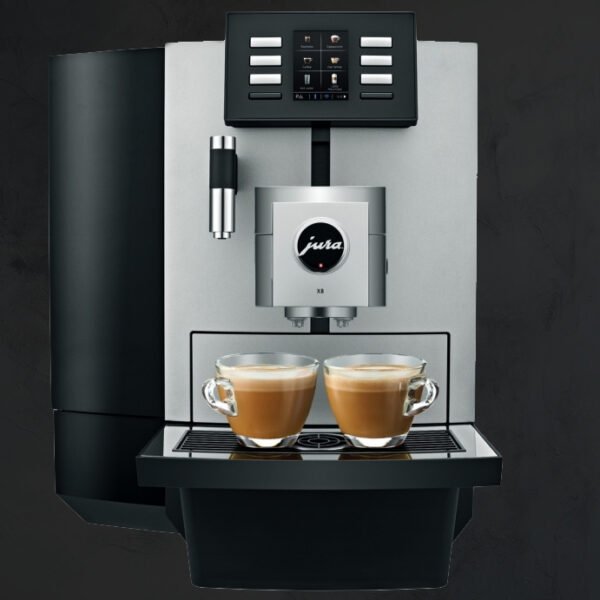
Offices and small hospitality venues rarely need 200 cups of capacity, but they do need a machine rated for commercial use rather than a domestic model working beyond its design life. The Jura WE8 sits precisely there, built around a working day of roughly 35 drinks.
One touch, whole menu
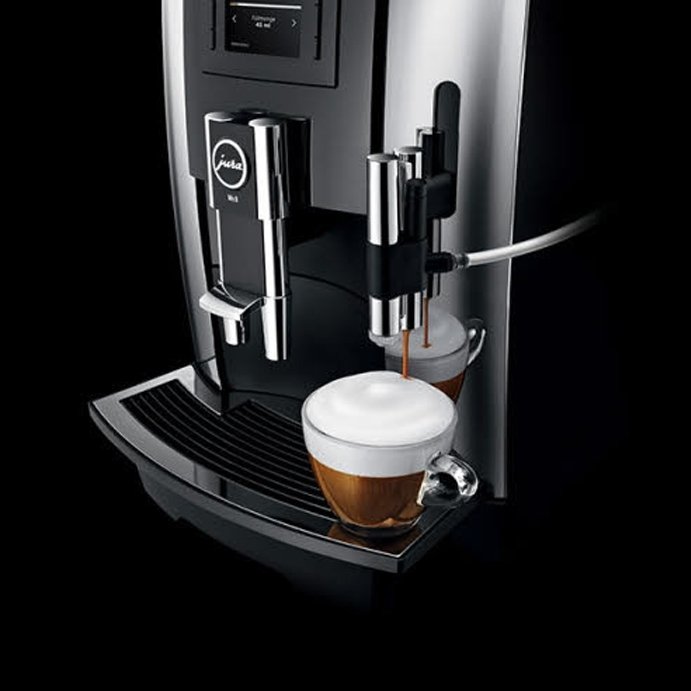
The WE8 includes an automatic milk system, so cappuccino, latte macchiato and flat white are produced at a single press alongside espresso, ristretto and lungo. The professional fine foam frother aerates milk to a smooth, even texture without anyone touching a steam wand.
One grinder, adjusted to your beans
A single ceramic disc grinder handles the beans and adjusts to suit the roast you buy. That adjustment is worth making properly, because the recipes are fixed and there is no barista standing there to compensate for a bean that does not fit them.
Capacities, and what comes with it
- 3 litre water tank with a 500g bean hopper
- Programmable cup sizes and strength settings per drink
- Supplied with 1,000 drinks to get the machine into service
- Two-year warranty on the machine
Does 35 drinks describe you?
Daily figures flatter sites with an even spread and punish sites with a spike. A practice with patients arriving all morning is a different proposition from an office where everyone wants a coffee at nine and again at three. Count the drinks in your busiest hour, not the ones across the whole day.
Be realistic about growth
Businesses rarely buy a second machine; they replace an undersized one. Where the peak is genuinely sharp or the headcount is rising, look further up the bean to cup range before deciding.
No plumbing to arrange
The tank-fed design means no plumbing work is needed before it goes live, which is why so many of these machines end up in offices that could never justify a builder, and in leased premises where plumbing a machine in is not an option at all.
Measure the gap first
The position needs a socket, a worktop that will not flex, headroom to fill the beans, and a route to a tap that does not cross the whole floor. Measure the gap under the wall units before ordering, since that is the dimension people forget. The narrow casing helps here, because most of these venues are fitting the machine into an existing kitchenette rather than building a coffee point around it.
Leave room for a fridge
Milk has to be chilled and within reach of the milk line, so allow space beside the machine for a small fridge from the start rather than finding somewhere for it afterwards.
The milk routine decides everything
This is the part that decides whether a machine like this is still making good drinks in two years. The milk system rinses automatically after each use and prompts for a full clean, so hygiene is managed by the machine rather than by memory, but somebody still has to press the button and put the cleaning agent in when asked. Make it one person’s job, not the room’s. The upside is that the alternative, a steam wand purged and wiped by hand after every drink, requires more discipline from more people and is the thing that most often goes wrong in a small venue.
Training, or the lack of it
Because every drink is built to a programmed recipe, output does not depend on who is on that day, and there is nothing to teach beyond the display, the grounds drawer and the milk prompt. Beans and water go in, grounds come out, and the machine tells you when it wants attention. That is the whole job, which is why it works in small offices with a genuine appetite for cappuccino, in dental and medical practices serving waiting rooms and staff alike, in salons and boutique retail where the drink is part of the service, and in meeting rooms with no trained operator anywhere near them.
Stepping up, sideways or down
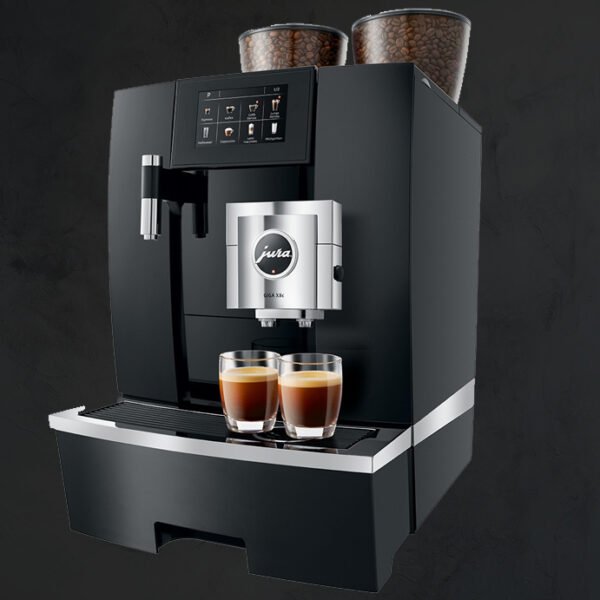
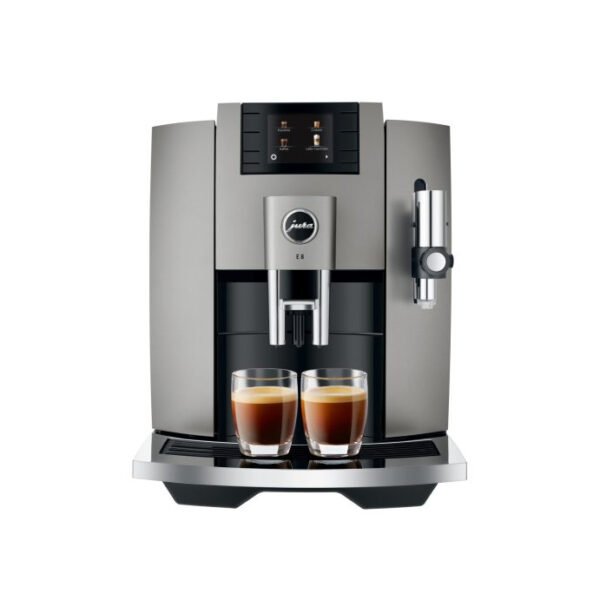
If your site currently runs a domestic bean-to-cup that keeps failing under office use, this is the sensible step up without moving to a full high-volume unit. If nobody actually drinks milk-based coffee, a model without a milk system costs less to buy and less to look after. If the drinks are almost all served in one short rush, or the machine will be feeding the public rather than a team, the extra capacity and plumbed feed of a larger machine will pay for itself in queue time, and the rest of the Jura line-up covers those steps. Delivery and installation sets out how the machine gets to you and what to have ready when it arrives.
Reviews
There are no reviews yet.