
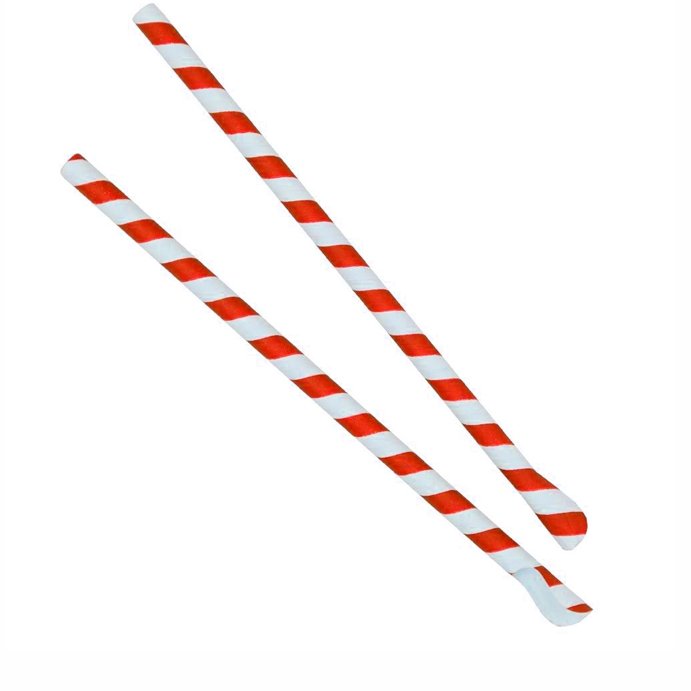

This is a bulk box of 1,000 paper straw spoons, and the scoop formed at the tip is the whole reason to buy them. Slush thickens as it settles, and a straight straw simply cannot draw it, which leaves customers tapping the cup or fishing about under the lid. Anyone who has watched that happen from behind a counter knows it quietly costs the goodwill of a repeat sale.
The bore, the scoop and the paper
At 8mm the bore is generous enough for a partly melted mix to move freely, so the drink stays enjoyable from the first mouthful to the last, and the spoon end lets a customer break up and lift the frozen slush sitting at the bottom of the cup. They are made from paper rather than plastic, which matters to venues that have already taken single-use plastic out of the rest of their service, and they can join the same waste stream as other paper service items where your venue’s arrangements allow. Sizing is standard, so they drop straight into an existing service alongside ordinary slush cups and lids without changing anything else.
Working out how many you need
A thousand sounds like a great many until the first genuinely hot Saturday, when a kiosk can move through a striking share of a box in an afternoon. The sensible planning rule is one straw per drink plus a small allowance for the ones that are dropped, handed to children twice, or taken and never used. Order in a quantity that carries you through the peak weeks rather than the average ones, because the week you run out is guaranteed to be the busiest week of the year. That logic applies as much to a cinema, leisure centre or theme park serving frozen drinks all year as it does to a seaside kiosk or holiday park trading hard through the summer, and it matters most to event and festival caterers, who cannot reorder mid-weekend. A convenience store running a slush machine as an impulse line has more room to manoeuvre, but a bulk quantity still saves the weekly reorder.
Storage, and the jar behind the counter
Paper wants to be kept dry. Store the box flat in a stockroom away from splashes and condensation, and decant a working quantity into a dispenser or a jar at the service point rather than leaving the whole box open beside the machine. Refill that container during quiet spells. It is a small habit, but it is the difference between straws that feel crisp in the hand and a soggy handful at the bottom of a pot on a humid afternoon. In peak weeks, keep a reserve box behind the counter, because one hot afternoon can clear more stock than a normal fortnight.
Specifying cups, lids and straws together
If you are building a slush offer from scratch, decide the cup size first and let the lids and straws follow it, since a domed lid with a ready-cut straw hole is what makes a slush portable in the first place. Our slush cup range covers the sizes these are designed to sit alongside. The slush and cocktail syrups decide what actually goes in the bowl, and our guide to running a frozen drinks offer profitably covers the equipment, the seasonality and where the money actually comes from.
Put them on the same order
Straws are the smallest line in a slush operation and the one most likely to be forgotten when the order goes in. Buy them at the same time as the cups, the lids and the syrup, in a quantity sized to your busiest fortnight rather than your quietest, and the subject need not come up again until the season turns.
Reviews
There are no reviews yet.